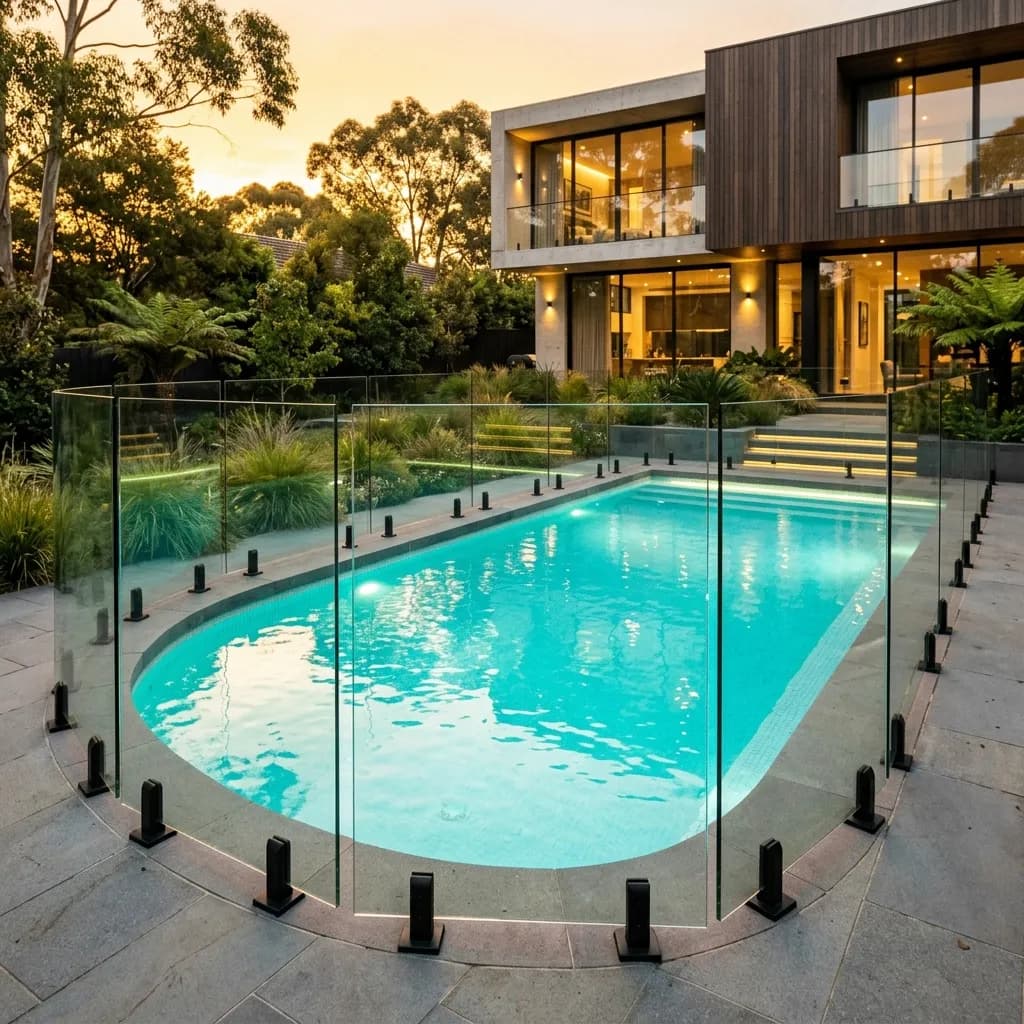
The Non-Climbable Zone
explained properly
The clearance requirement around a pool barrier that fails more inspections than the fence ever does. What it covers, how far it extends, and what quietly breaks it.
What is the non-climbable zone?
A pool barrier only works if a small child cannot climb it. AS 1926.1 therefore requires more than a compliant fence: it requires clear space around that fence, so there is nothing to climb on to get over it. That clear space is the non-climbable zone.
There are two of them. On the outside of the barrier, the zone is measured as an arc from the top of the fence, and nothing climbable may sit within it. On the pool side, a smaller zone applies, measured from the base up.
What counts as climbable is broader than people expect. Planter boxes, pot plants, retaining walls, pool pumps and filter housings, air conditioning units, barbecues, low tree branches, garden benches, rainwater tanks and even a stacked pile of pavers can all fail a pool.
This is the single most common reason a Victorian pool fails certification. The fence is almost never the problem. Something got put next to it, usually during landscaping, usually years after the barrier went in.
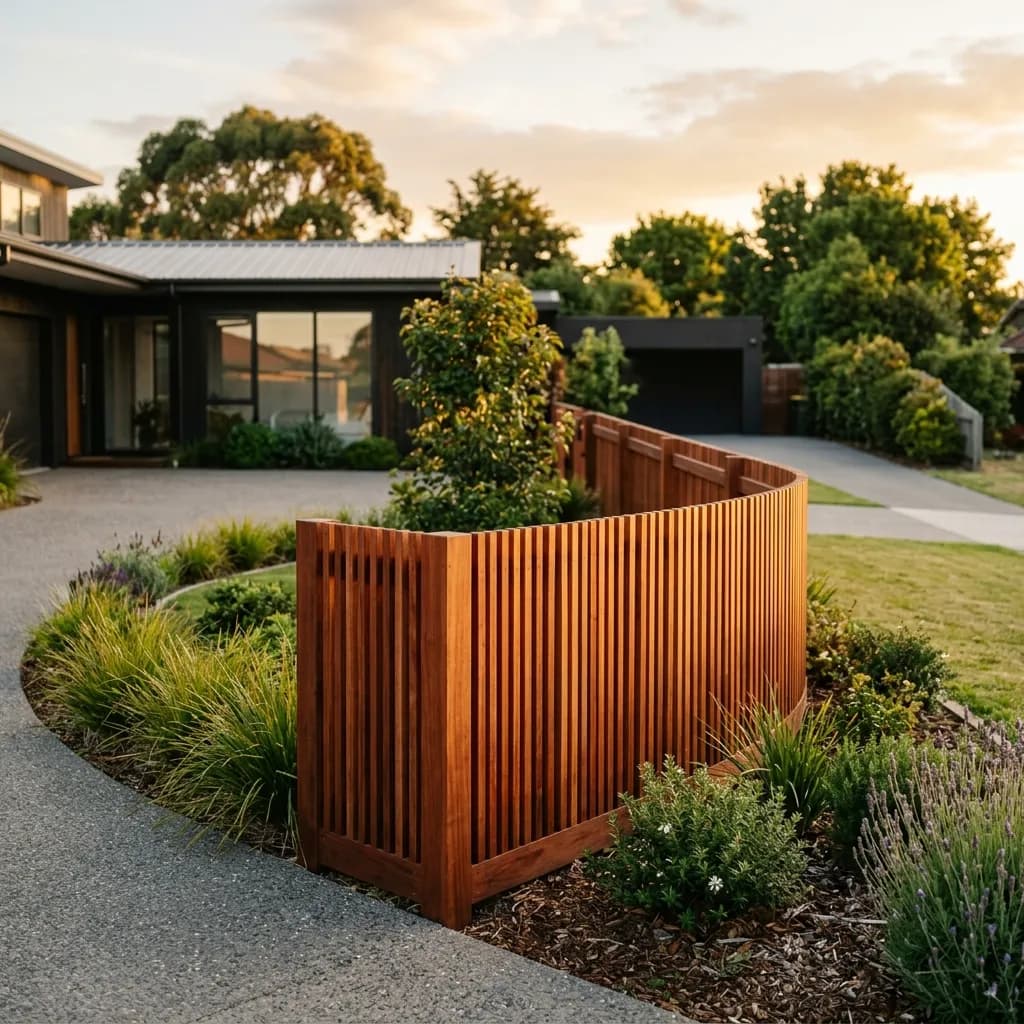
The objects that most often break the zone
From pools we have been called to after a failed inspection. Almost all of them were added after the barrier was installed, by someone who had no idea the zone existed.
| Object | Where it usually is | The fix |
|---|---|---|
| Planter box or raised garden bed | Hard against the outside of the fence | Move it clear of the zone, or lower it |
| Pool pump or filter housing | Tucked beside the barrier to hide it | Relocate, or rescreen so it is not climbable |
| Retaining wall | Where the ground level changes | Often means moving the barrier line |
| Air conditioning condenser | On the house wall near the barrier | Relocate, or extend the barrier past it |
| Tree branches and shrubs | Overhanging or beside the fence | Prune, and keep pruning. It grows back |
| Barbecue, bench or outdoor furniture | Moved there for a party, left there | Keep clear. This is the easiest one to fix |
| Rainwater tank | In the side return next to the pool | Relocate, or rework the barrier line |
| Stacked pavers or building materials | Left over from the landscaping | Remove them |
General information for Victorian property owners, current at the date of last review. It is not legal advice and it does not cover every situation. Rules vary between councils and the legislation changes, so confirm the detail with your council or a lawyer before you rely on it for a dispute.
Five things that keep a pool compliant
The zone is not a one-off check at installation. It is a condition your yard has to keep meeting, and gardens grow.
Design the landscaping around it
The cheapest time to deal with the zone is before the garden goes in. Planter boxes and pump housings placed with the zone in mind cost nothing extra; moved afterwards they cost a lot.
Watch level changes
Where the ground steps or a retaining wall runs near the barrier, the effective climbable height changes. Sloping surrounds are where zone problems are least obvious and most expensive to fix.
Remember boundary fences
Where a boundary fence forms part of the pool barrier, it has its own requirements, including on the neighbour's side, which you may not control. Ask before relying on an existing fence.
The gate is inside the zone too
The clearance requirement applies around the gate as well, and the gate is already the most common failure point. Nothing should be positioned where it helps someone over or through it.
Prune on a schedule
Branches that were clear at certification will not be in four years. A tree beside a pool barrier is a recurring maintenance item, not a one-time check.
Four things worth knowing before an inspection
We install and certify pool barriers, so these are the patterns we see rather than theory.
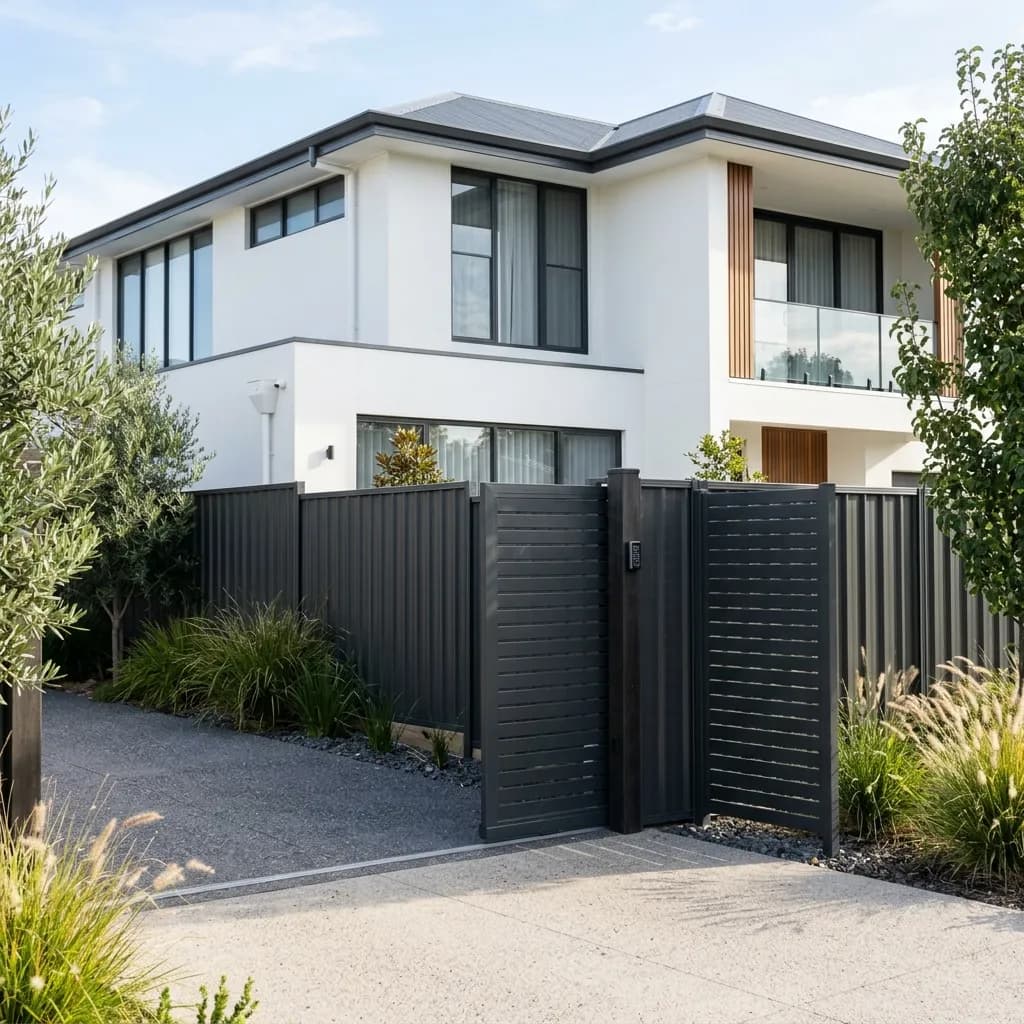
The gate, and what is next to the fence
Get those two right and most pools pass. Neither of them is about how much you spent on the barrier itself.
The barrier is rarely the failure
In our experience pools fail on the gate, on a gap somewhere, or on something climbable in the zone. Spending more on the fence does not address any of the three.
Landscapers do not know about it
Most zone breaches are created months or years after the barrier passed, by a landscaper or the owner adding something perfectly sensible in a place that happens to be inside the zone.
The neighbour's side counts
Where a boundary fence forms part of the barrier, what is stacked against it next door can matter. This is the hardest one to control and worth raising with the neighbour early.
Check it before settlement
Buying a house with a pool means inheriting its compliance obligations. A pre-purchase barrier check is cheap relative to discovering the barrier line has to move.
We assess, build and certify
Pool barrier work across Melbourne
Bayside
Known for Bayside, Glen Eira and Port Phillip councils.
Non-climbable zone questions
What pool owners ask, usually after an inspection has gone badly.
Ask us to assess your barrierA required area of clear space around a pool barrier where nothing climbable may be placed. AS 1926.1 sets a zone on the outside of the barrier, measured as an arc from the top of the fence, and a second smaller zone on the pool side. The purpose is to stop a child using an object to get over the barrier.
Related guides
Registering a Pool in Victoria
What you must lodge with the council, and how often.
Read more ComparisonGlass vs Aluminium Pool Fencing
Both comply. What the glass premium actually buys.
Read more ComparisonFrameless vs Semi-Frameless
If you have settled on glass, the next decision.
Read more ComplianceFence Height Rules
Where a pool barrier is also a boundary fence, both rules apply.
Read more
Have your barrier and zone assessed
We check the barrier line and the non-climbable zone before quoting, so what you pay for is something that can actually be certified. Free.