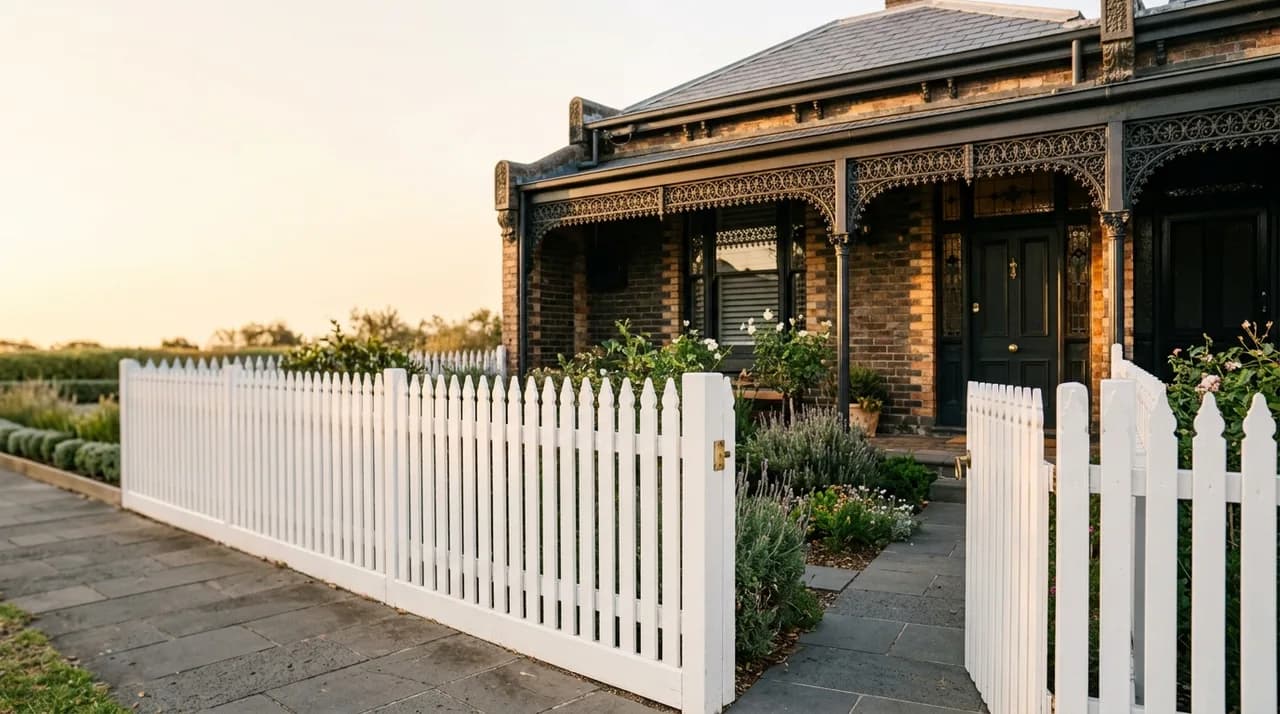
Timber Picket Fence Melbourne
A picket fence is a front fence. It is the one the street sees, the one a heritage overlay has an opinion about, and the one that is painted rather than stained. That changes almost every decision: the height is set by the front-setback rules rather than by privacy, the picket top is chosen to match the house and its neighbours, and the timber is chosen for how it holds paint. This page covers the profiles, the spacing, the heights that avoid a permit, and what an overlay will and will not let you do.
Picket top, spacing and height: the three things the street notices
Every picket fence is the same construction: pickets nailed to two rails between posts, with the gaps left open. What makes one look right on a Victorian terrace and wrong on a 1970s brick veneer is the profile of the picket top, the spacing between pickets, and the height. Pointed tops are the Victorian and Federation default; a rounded top is Edwardian and interwar; a flat or dog-eared top is mid-century and suits a plainer house. Spacing runs from a tight 40mm gap that reads as a solid fence to a 75mm gap that reads as a picket fence. Height is where the rules come in: most Melbourne councils allow a front fence up to 1.2 metres without a permit, and 1.5 metres on a main road. Above that, or on a corner where sightlines matter, you are into a permit. In a heritage overlay, the council will usually expect a fence that matches the era and height of the house and the neighbouring fences, which in practice means a pointed or rounded picket at 1.0 to 1.2 metres, painted.
What a picket fence asks of you
A front fence is on show, so upkeep is part of the deal. Here is the honest picture for each material.
Treated pine picket, painted
The traditional look. Pre-primed pickets take paint better and save a coat on site.
Hardwood picket, painted or oiled
Holds a sharp profile longer, because dense timber does not dent or splinter at the top.
In a Heritage Overlay or Neighbourhood Character area, style and height can be restricted. We confirm the overlay on your address before you order pickets.
See the finish on a real boundary, not a chip
Timber colour shifts completely between a small sample and a whole fence. Tap a species or stain to wrap a real Melbourne backyard.
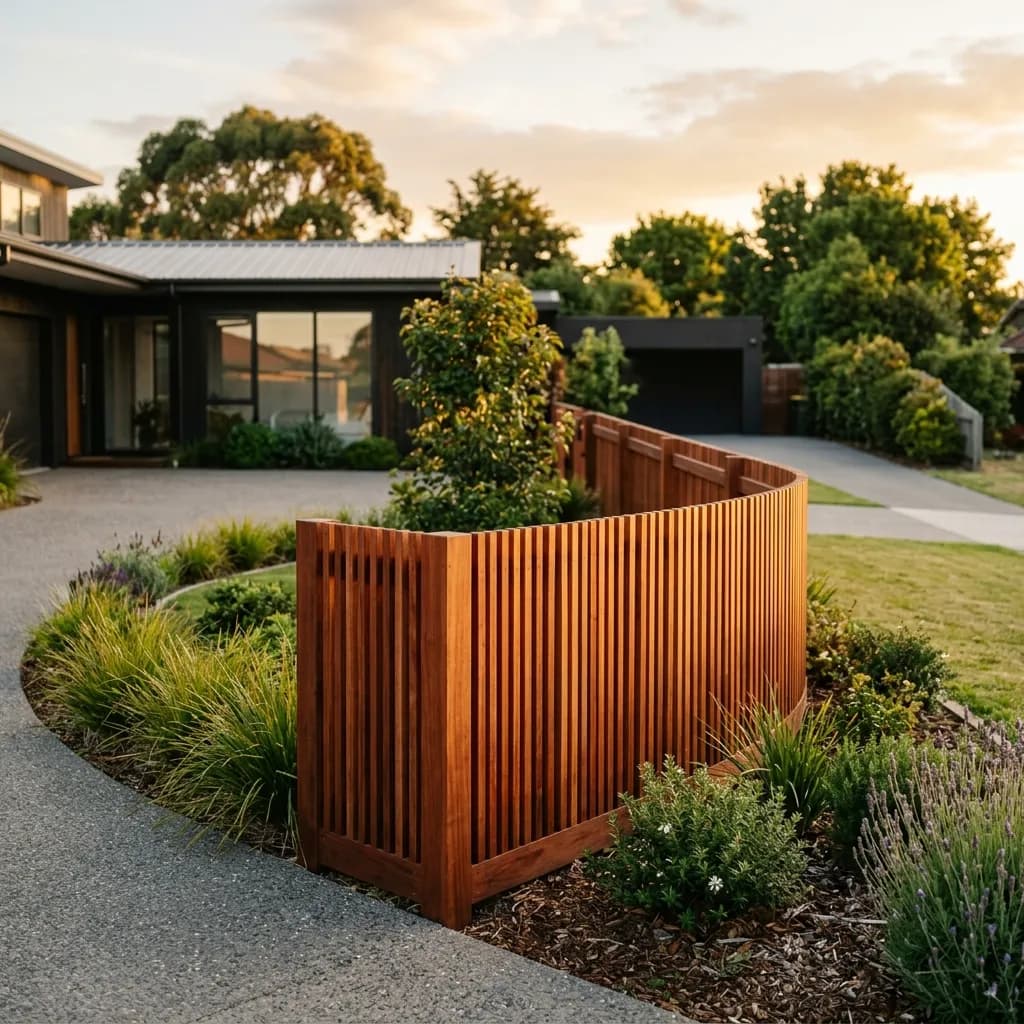
On-screen tones are indicative; timber grain and stain read differently in daylight. We bring physical samples to your free measure.
Timber fencing cost Melbourne
Indicative installed rates for a standard residential run, quality timber, H4 posts in concrete and rails included.
Technical specifications
Timber & treatment
Dimensions & install
Compliance & assurance
How a picket fence goes in
 1
Check the overlay and setback
We look up your address for a heritage or neighbourhood character overlay and confirm the front-setback height limit before anything is quoted.
 2
Profile, spacing and colour
We match the picket top to the house and the street, agree the gap, and pick the paint. Bring a photo of a fence you like.
 3
Fixed quote
Pickets, posts, rails, gate, paint and any permit application, each as its own line.
 4
Posts, rails, pickets
Posts set in concrete and capped, two rails fixed, pickets spaced with a jig so the gap is identical along the run. The bottom rail is kept off the ground.
 5
Paint and hand over
Nail holes punched and filled, a finish coat on site if we are painting, gate hung and swinging true.
The street will judge this fence. We build it to be judged.
Installed by our own crews, guaranteed for a decade.
Not subcontracted, H4-treated posts in concrete, fully insured, every time.
Overlay checked first
We look up your address before quoting, because a picket cut to the wrong profile in a heritage overlay is a fence you take down.
Spacing by jig, not by eye
Every gap is set with a spacer so the run reads as one fence, not a row of guesses.
Bottom rail off the ground
Pickets that touch the soil rot from the bottom. Ours clear it, and the posts are capped so water runs off.
Painted properly
Nail holes punched and filled, primed end grain, and a finish coat after install, not before.
Frequently asked questions
Straight answers on cost, timber grades and how a timber fence holds up.
Ask us anythingUsually not at 1.2 metres or under on a standard front boundary. Most Melbourne councils require a permit above that, on a corner block where sightlines matter, or inside a heritage overlay regardless of height. We check your address before quoting.
Timber fencing across Melbourne
Inner North
Known for Victorian terraces and Edwardian villas in heritage overlays.
Related timber topics
Ready for a straight
timber quote?
Free measure · same-day quote · quality timber with a 10-year workmanship guarantee.