Storm Damaged Fence
Does insurance pay?
What to do in the first hour, whether your policy will respond, how it interacts with your neighbour's half, and when claiming is the wrong move.
Will insurance cover a storm-damaged fence?
Often, yes. Most Victorian home and contents policies include fences as an insured structure and cover storm damage. What they do not cover is a fence that fell over because it was already rotten, and that distinction is where most declined claims come from.
Before anything else: if the fence is down and it encloses a pool, or it is holding back a dog, or it is leaning towards a footpath, that is a safety problem that cannot wait for an insurer. Make it safe first, photograph everything, then start the claim.
Whether it is worth claiming at all is arithmetic. If your excess is close to the cost of the repair, paying for it directly is usually the better outcome. A small claim can affect your premium and your claims history for years.
The shared-fence question confuses people. Your policy covers your interest in the fence. Your neighbour's obligation under the Fences Act is a separate matter, and insurers commonly account for the fact that only half the fence was ever yours. Tell the insurer it is a dividing fence rather than letting it come up later.
Usually covered, usually not
General patterns across Victorian home policies. Yours is the one that counts, so read the product disclosure statement rather than this table.
| Cause | Usually covered? | Worth knowing |
|---|---|---|
| Storm or high wind | Usually | The standard case. Some policies require a minimum wind speed |
| A tree brought down by a storm | Usually | Removing the tree may be a separate part of the claim |
| Impact from a vehicle | Usually | The driver's insurer may respond instead |
| Fire | Usually | Covered under most policies |
| Rot, rust or age | No | Wear and tear is excluded on essentially every policy |
| A fence that was already leaning | Often declined | Insurers argue pre-existing condition. Old photos help you |
| A neighbour's tree, not storm related | Depends | May be a liability question rather than a claim |
| Flood | Depends on the policy | Flood cover is frequently a separate option |
General information for Victorian property owners, current at the date of last review. It is not legal advice and it does not cover every situation. Rules vary between councils and the legislation changes, so confirm the detail with your council or a lawyer before you rely on it for a dispute.
The first 48 hours, in order
 1
Make it safe
A fence enclosing a pool, containing a dog, or leaning over a footpath is an urgent safety issue. Temporary fencing or propping is acceptable and insurers expect you to prevent further damage.
2Photograph everything
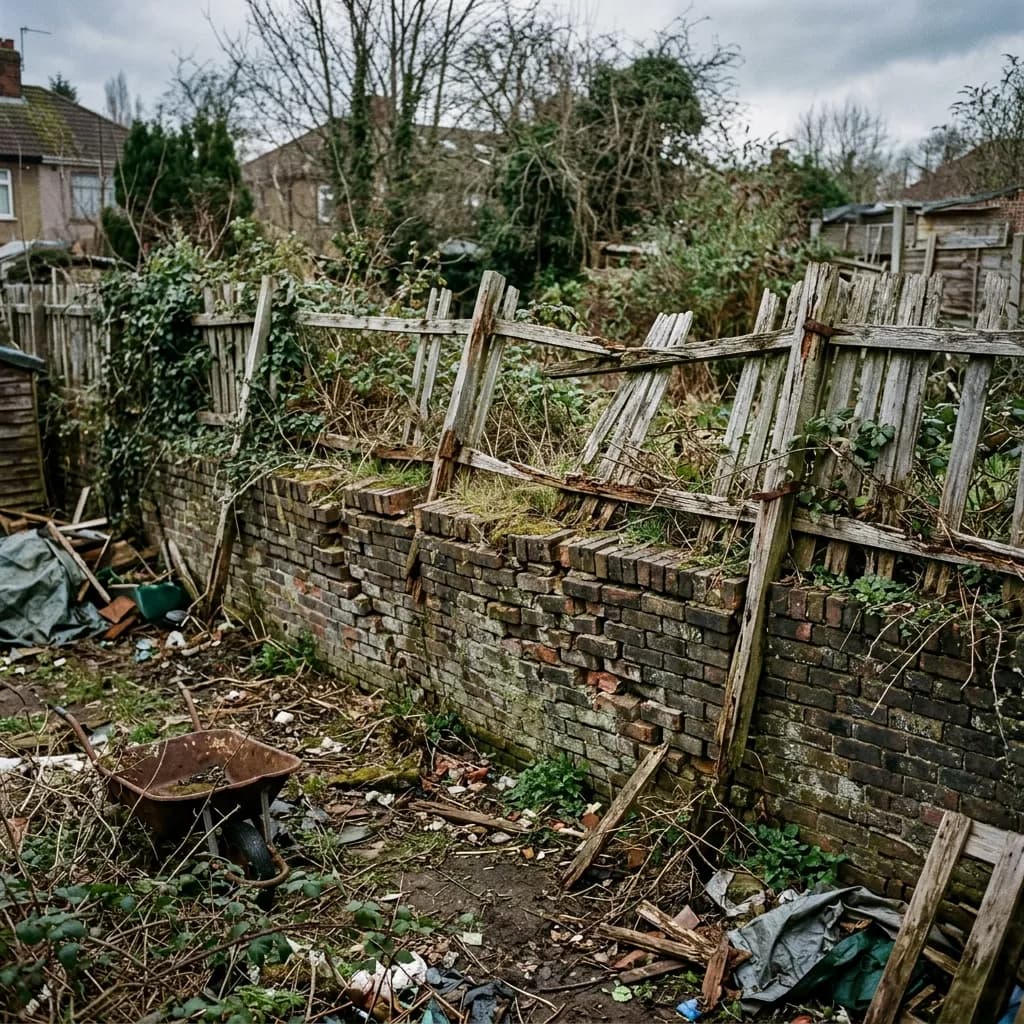
Wide shots and close-ups, from both sides, including the posts and the failure point. Photograph the tree or debris that caused it. This is the evidence for both the insurer and your neighbour.
 3
Call the insurer
Lodge it early even if you are unsure about claiming. Ask specifically about the excess, whether they need their own assessor, and whether you may use your own contractor.
 4
Get a written quote
Insurers want an itemised quote. If it is a dividing fence, the same quote is what you serve on your neighbour with a fencing notice, so one document does both jobs.
 5
Decide: claim or pay
Compare the excess and the premium impact against the repair cost. On a small run, paying directly is often better. Only commit to the repair once you have chosen the route.
Four things worth knowing before you lodge
We rebuild a lot of storm-damaged fences and see how these claims go. These are the patterns.

Make it safe, but photograph as you go
You are expected to prevent further damage, and you are expected to be able to show what happened. Both are achievable if you take pictures before each thing you move.
Pre-existing condition
The most common decline. If the posts were already rotten at the ground line, an insurer can argue the storm merely finished a fence that had already failed. Photographs of the failure point matter here.
Clearing up too fast
Tidying the debris before photographing it removes your evidence. Make it safe, yes, but photograph as you go. An assessor arriving to a clean yard has nothing to assess.
It is a shared fence
Your policy insures your interest. Insurers commonly account for the fact that half the fence was your neighbour's liability. Raise it up front rather than having it emerge at settlement of the claim.
Pool fences cannot wait
A damaged pool barrier is a compliance and safety failure from the moment it happens. Make it safe immediately and treat the insurance question as the second problem, not the first.
Storm damage repairs across Melbourne
Bayside
Known for Bayside, Glen Eira and Port Phillip councils.
Storm damage and insurance questions
What owners ask in the day or two after a fence comes down.
Get an urgent repair bookedMost Victorian home policies include fences and cover storm damage, but cover varies and some policies have conditions such as a minimum wind speed. Wear, rot and rust are excluded on essentially every policy. Check your product disclosure statement.
Related guides
Neighbour Fence Disputes
The Fences Act split that runs alongside any claim.
Read more ComplianceBody Corporate Fence Repair
Where the fence belongs to an owners corporation instead.
Read more GuideRotting Fence Palings
The condition that gets storm claims declined.
Read more GuideWhen to Replace a Fence
Whether this repair is worth doing, or the run is due.
Read more ComplianceNon-Climbable Zone Rules
If it is a pool barrier, this is what it has to satisfy again.
Read more
Fence down? We can make it safe today
Emergency make-safe and an itemised written quote you can give straight to your insurer or serve with a fencing notice.