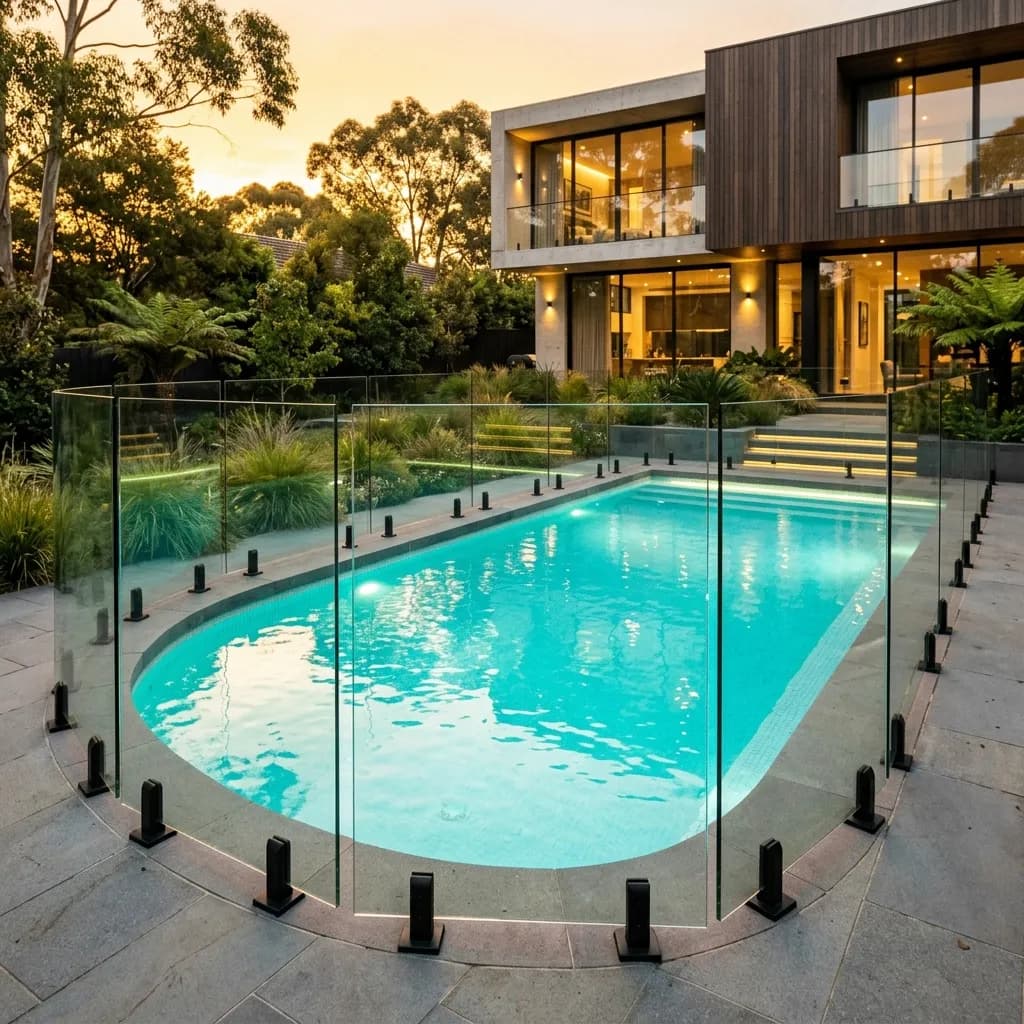
Frameless vs Semi-Frameless
Is the upgrade worth it?
Both meet the same standard and keep children just as safe. The difference is posts, and what you pay to remove them. Here is the honest cost of that decision.
Frameless or semi-frameless, in one paragraph
Frameless costs more than semi-frameless installed. On a typical 15 metre pool run the gap is meaningful, for a fence that keeps your children exactly as safe either way.
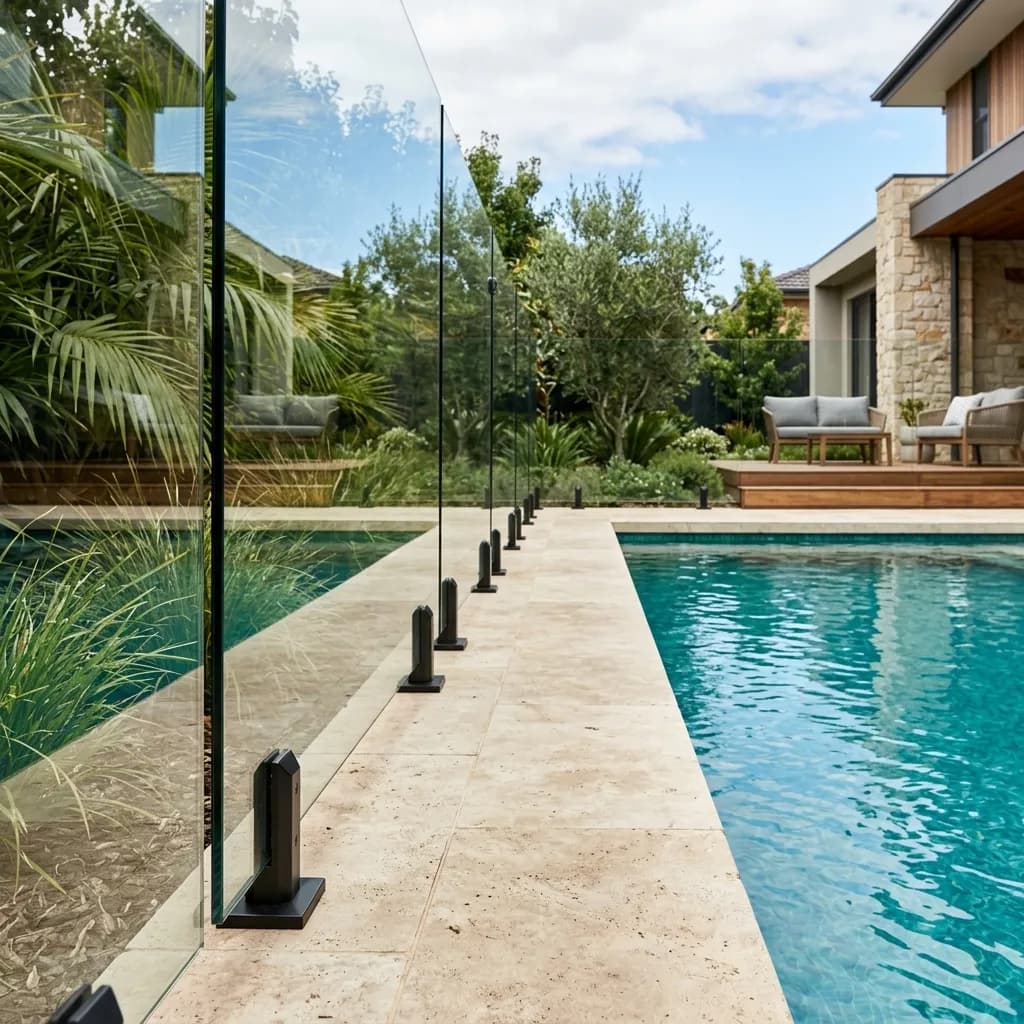
The functional difference is posts. Semi-frameless has slim powder-coated posts between 10mm glass panels. Frameless has no posts at all: 12mm panels stand on discreet stainless spigots, so the barrier reads as almost nothing.
Compliance is identical. Both are built to AS 1926.1 and both certify. Anyone telling you frameless is safer or more compliant is selling, not advising.
Where frameless earns its money is a sightline you would otherwise lose. If the barrier sits between your living area and the pool, or between the pool and a view, the posts are exactly what you are paying to remove. If it runs along a side boundary against an existing fence, you are paying to remove posts nobody was going to look at.
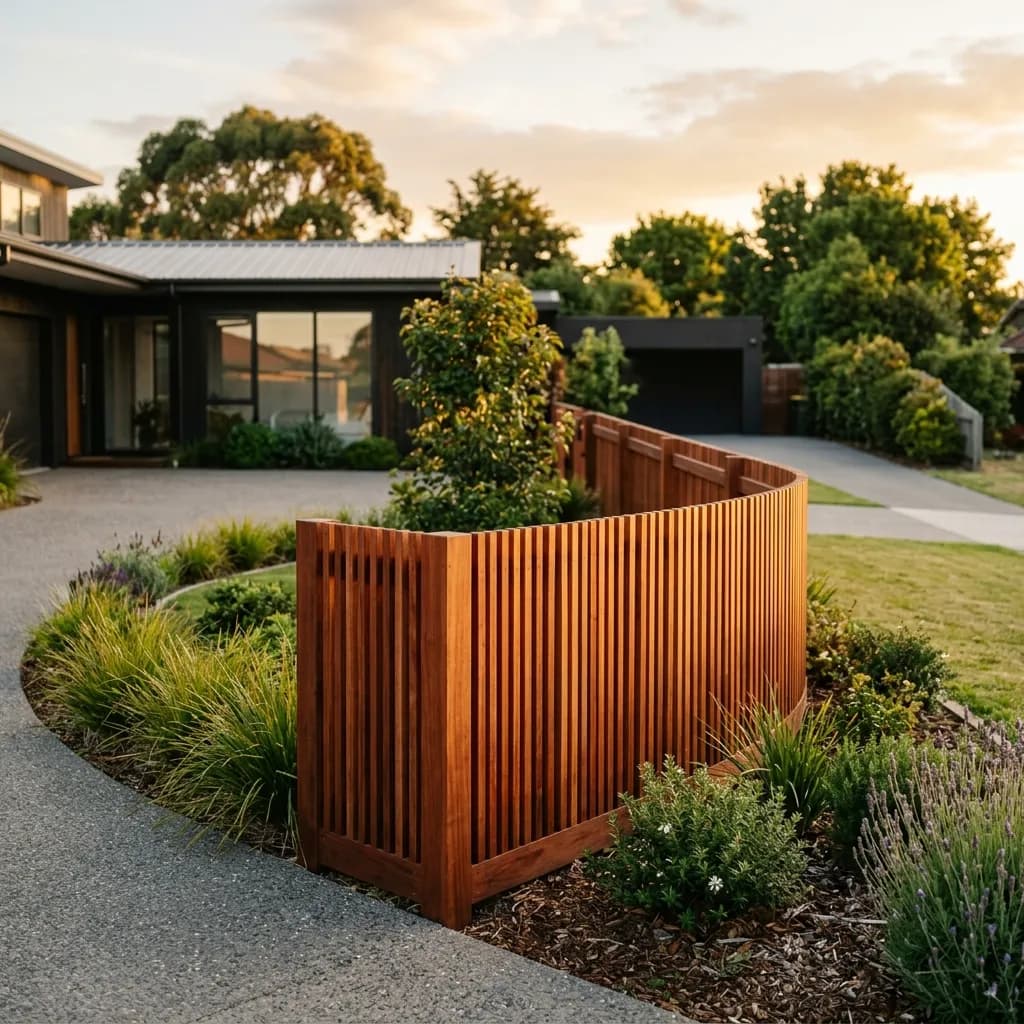
Frameless vs semi-frameless, compared properly
The two systems, on the things that actually differ. Note how much of the table is identical: that is the point.
| Frameless | Semi-frameless | |
|---|---|---|
| Glass thickness | 12mm toughened | 10mm toughened |
| Posts | None, spigot-mounted | Slim powder-coated posts |
| Complies with AS 1926.1 | Yes | Yes |
| Visible hardware | Spigots only | Posts and clamps |
| Cleaning | More glass area, shows marks readily | Slightly less glass, posts hide some |
| Wind through the barrier | None, solid glass | None, solid glass |
| Lead time on standard panels | 2 – 3 weeks | 2 – 3 weeks |
Comparison assumes a flat, accessible barrier line and correct installation to AS 1926.1. Gates and certification are additional and identical for both. Reviewed September 2026.
Five things that should settle it
Safety does not decide this one, because both systems pass. These do.
What is behind the fence?
Frameless buys you a sightline. If the barrier sits between your living area and the pool, or between the pool and a garden or view, that is worth real money. If it runs along a side fence, you are paying to remove posts nobody would have noticed.
How long is the run?
The gate and certification cost the same either way, so on a short run they dominate the total and the upgrade is proportionally cheaper. On a long run the per-metre gap is the whole story.
Will you clean it?
Frameless is more glass and no posts to break up the surface, so marks show more. A frameless fence that never gets wiped looks worse than a well-kept semi-frameless one.
Is the pool the feature?
On a landscaped pool that is the centrepiece of the garden, frameless disappears and lets the landscaping do the work. On a plunge pool in a side return, there is nothing to disappear into.
How many gates?
Each compliant gate is a fixed cost, regardless of system. Two gates on a small pool can cost more than the glass itself, and that budget is often better spent on the gates than on the upgrade.
Four things worth knowing before you choose
We install and certify both, so we have no preference. These are the misunderstandings that cost people money on this specific decision.
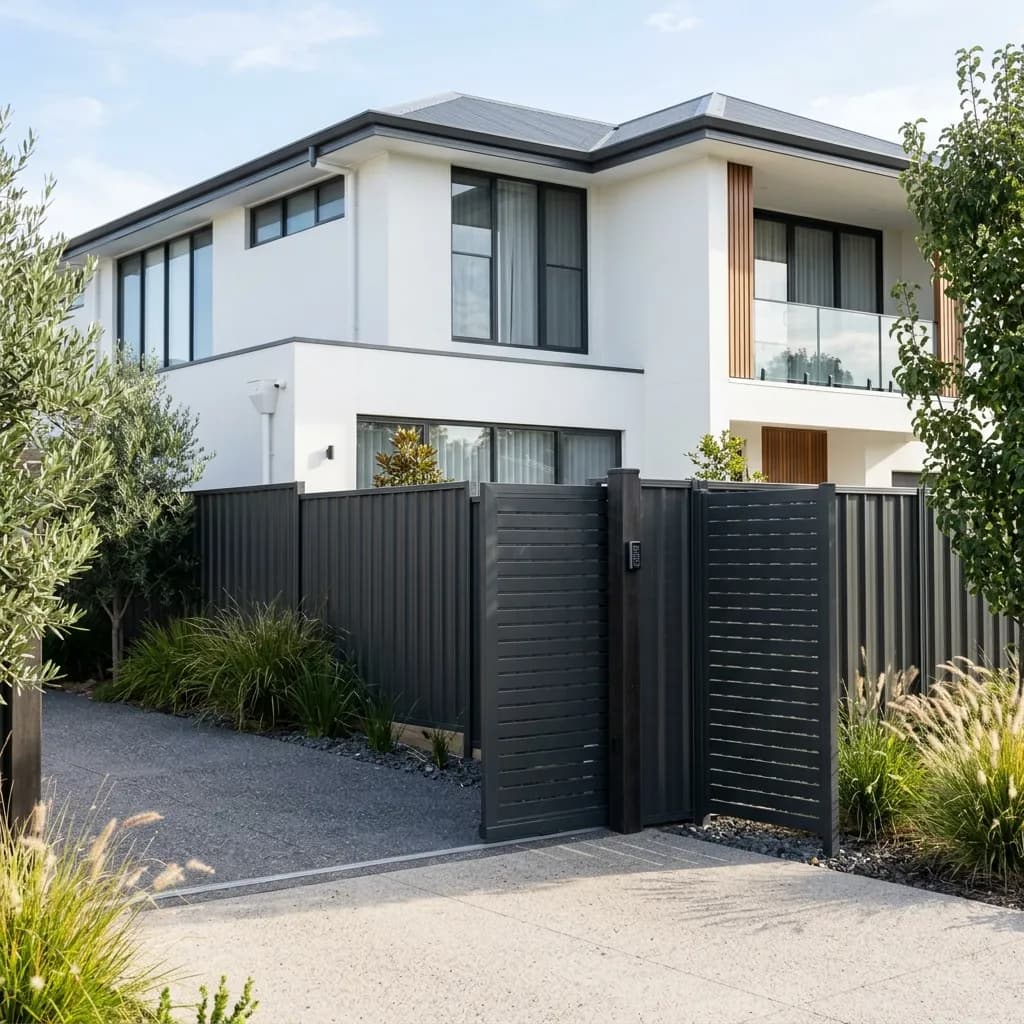
Inspections fail on gates and clearances, not glass
Whichever system you choose, the barrier passes or fails on the gate hardware and on what sits inside the non-climbable zone. Budget for those first.
Frameless is not safer
Both systems are built to AS 1926.1 and both certify. If a quote implies frameless is more compliant, treat that as a sales line and read the rest of the quote carefully.
Spigot grade matters more than system
Chlorine and salt attack stainless. 304 spigots look identical to 316 and tea-stain within a couple of seasons on a salt pool. This is worth more than the frameless upgrade and costs far less.
The gate is where pools fail
Neither system fails an inspection. Gates do, when the hinges lose tension and it stops self-closing from every position. Spend on the gate hardware before you spend on removing posts.
Custom panels cost weeks
Both systems are far cheaper in standard panel widths. A curved surround needing bespoke panels adds cost and can add six weeks of lead time. Design to standard sizes where the shape allows.
We install and certify both
People who had this exact decision
“They pointed out that two of our three runs sit against the side fence where nobody would notice posts. Frameless on the view side, semi on the others. Saved us a fair bit.”
“We wanted frameless and could not stretch to it. Semi-frameless in matt black looks deliberate rather than like a compromise, and the saving covered a proper gate.”
“Straight answer that both pass inspection identically. Every other quote implied frameless was somehow safer. That honesty is why we used them.”
Pool fencing across Melbourne
Bayside
Known for salt exposure, which narrows the sensible options.
Frameless vs semi-frameless questions
What owners ask once they are choosing between the two glass systems.
Ask us about your poolPosts. Frameless uses 12mm glass panels on discreet stainless spigots with no posts at all. Semi-frameless uses 10mm panels held between slim powder-coated posts. Structurally and legally they do the same job.
Related comparisons and guides
Glass vs Aluminium Pool Fencing
The bigger decision, before you get to which glass system.
Read more GuideNon-Climbable Zone Rules
The clearance requirement that fails more pools than the fence itself.
Read more GuideRegistering a Pool in Victoria
What you have to lodge with the council, and when.
Read more ComparisonAll Fence Comparisons
Every side-by-side we have, in one place.
Read more
Get both systems quoted for your pool
We will assess the barrier line and the non-climbable zone, then price frameless, semi-frameless, or a sensible mix. Free.