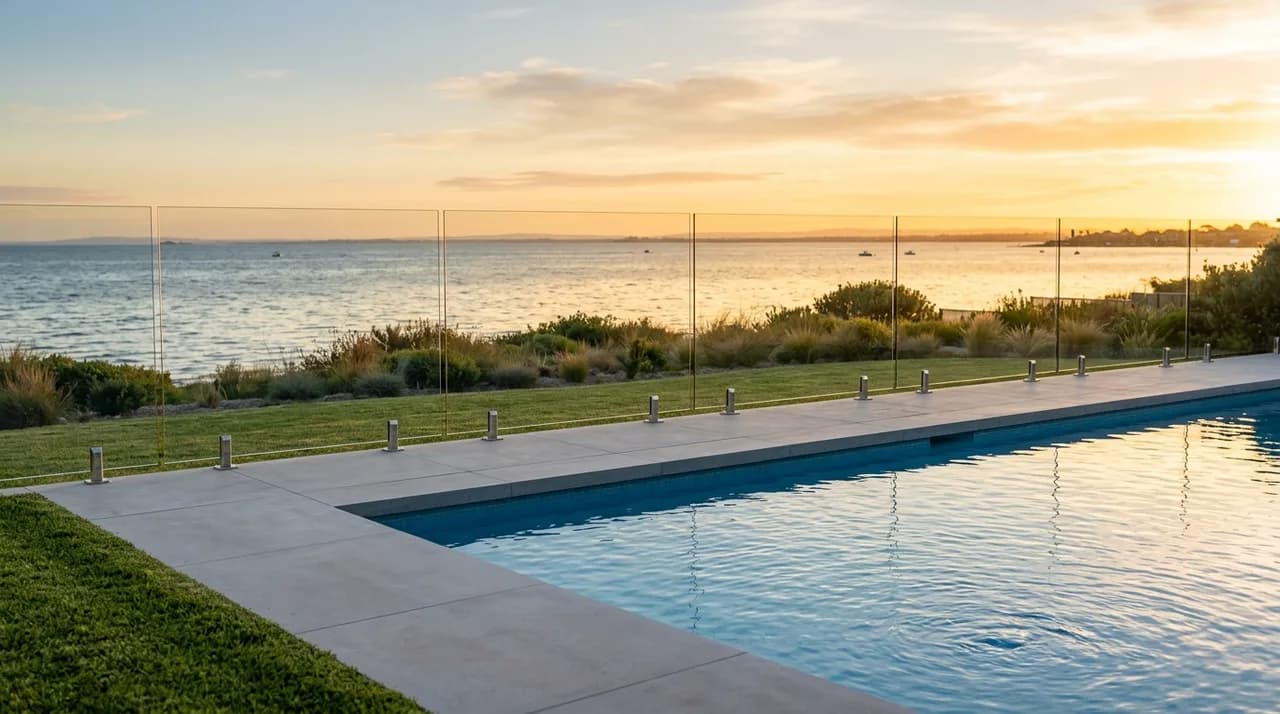
Frameless Glass Pool Fencing Melbourne
No posts, no rails, no frame. Frameless glass carries the whole barrier on the panel itself, which is why the spigot, the glass grade and the fixing into the slab decide whether it stays plumb for twenty years or starts to lean in three. This page covers how a frameless run is engineered, what the two mounting systems cost, and where each one belongs.
How a frameless glass barrier actually stands up
A frameless panel has nothing holding it but the fixings at its base, so every part of the system is doing structural work. The glass is 12mm toughened Grade A safety glass to AS/NZS 2208, chosen for stiffness rather than strength alone: a thinner panel passes the impact test but flexes under wind load and works its spigots loose over time. The spigots are 2205 duplex stainless, not 316, because duplex has roughly twice the yield strength and holds up against the chlorine and salt spray that pit ordinary marine grades around a pool. And the spigots are core-drilled 100mm into structural concrete and grouted, not surface-fixed to pavers. A paver is not a footing. Where there is no slab we cast one, or switch to the channel system, which spreads the load along a continuous base rather than through four points.
This page is general guidance, not legal advice. Pool barrier rules in Victoria depend on when your pool was built and are set by your council. Always confirm the requirements that apply to your property with a VBA or Building and Plumbing Commission registered inspector before you rely on anything here.
Two ways to hold a frameless panel. The site decides which one.
Spigots are the familiar look, a pair of polished stainless feet under each panel. A channel is a continuous slot in the paving that the glass drops into, invisible from a metre away. Spigots suit most pools and cost less; a channel suits long straight runs, tiled surrounds where you do not want feet, and edges where the paving is too thin to core-drill a spigot cleanly.
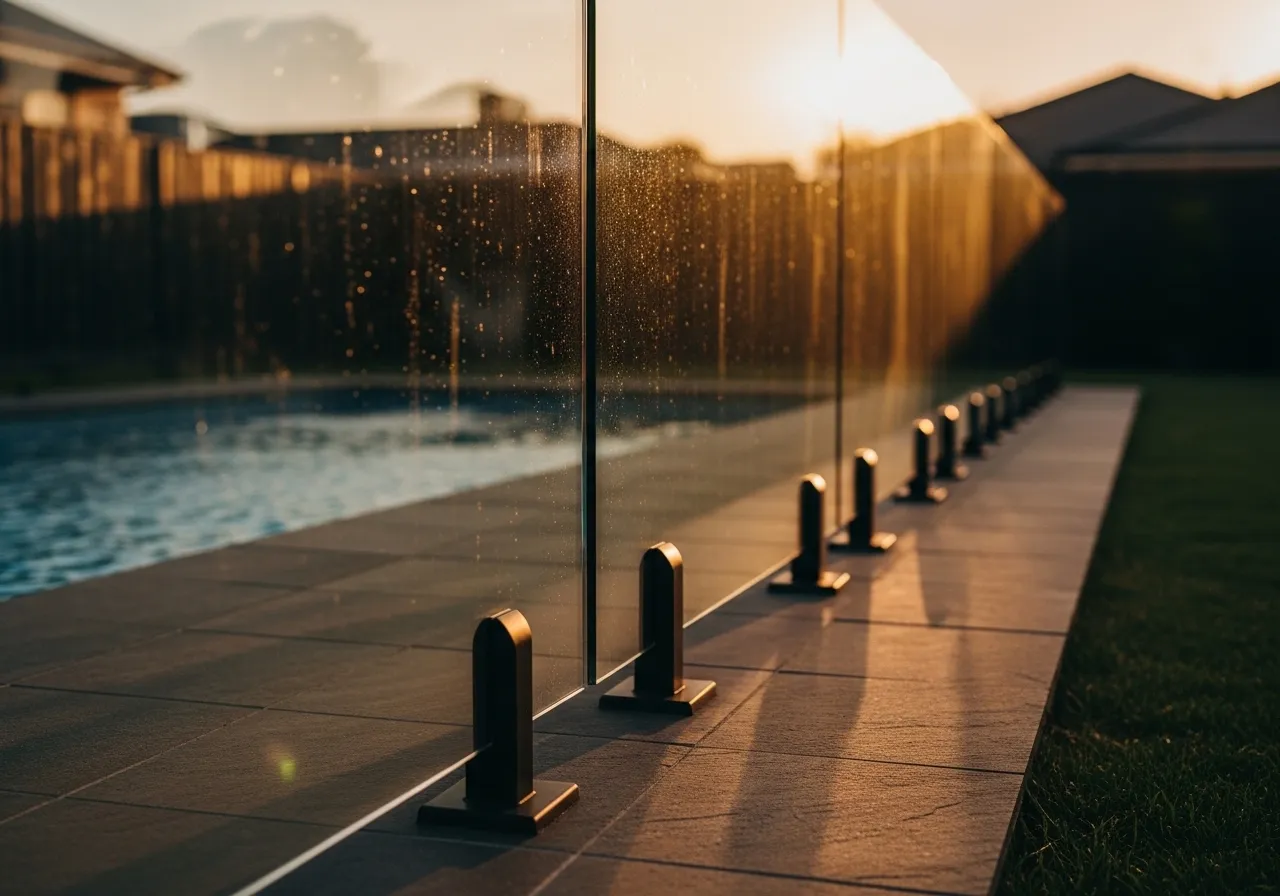
What changes on a frameless barrier at inspection
Tap through each requirement to see it on the barrier, then tick the ones your pool already meets. This is the sequence a registered inspector follows, offered as general guidance.
The barrier must measure at least 1200mm from the finished ground or paving to the top of the fence. Every low point around the pool is measured, so a garden bed or retaining wall can quietly drop you under.
Guidance only, current at time of writing. The Victorian Building Authority function is moving to the Building and Plumbing Commission. The standard that applies depends on when your pool was built. Confirm current requirements with your council and a registered inspector; the full rules are on our Victorian pool regulations page.
Every option below meets the standard. The difference is the look.
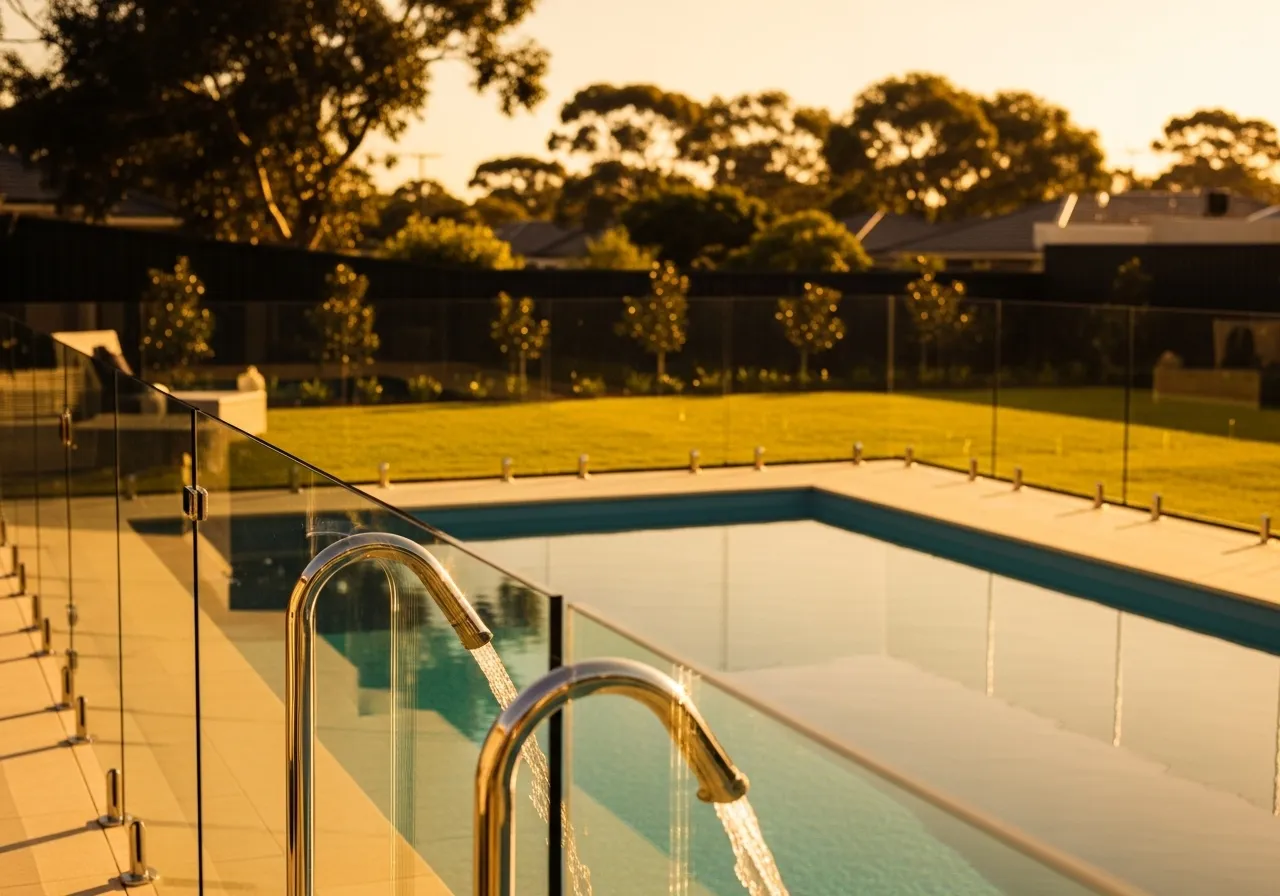 Now showing: Frameless spigot
Frameless on spigots
The standard frameless system. 12mm panels on two 2205 duplex spigots each, core-drilled into the slab. The look most people mean when they say frameless.
Build a live estimate, no email required
Configure your barrier to see what a complete install includes. The certificate of compliance and gate hardware are part of every job. We give you a firm, itemised price at your free on-site measure.
The numbers behind a compliant barrier
Every barrier is engineered to AS 1926.1-2012 and installed with marine-grade hardware. This is the drawing an inspector reads.
Dimensions and clearances
Materials
Gate and standard
Compliance is not a one-off, it runs on a cycle
Under Victoria's pool and spa barrier laws, every owner typically moves through the same four stages. We handle the parts that need a registered inspector. This is general guidance, not legal advice.
Register the pool
A new or existing pool is registered with council. We give you the barrier details the form asks for.
Inspect the frameless run
A registered inspector checks spigot heights, gaps and the gate. Frameless runs rarely fail on the glass; they fail on what sits beside it.
Lodge the certificate
The certificate of barrier compliance goes to council within 30 days of the inspection.
Re-check hinge tension
Hydraulic hinges lose tension over years. Before the four-year re-certification we re-set them so the gate still self-closes.
Pool fence installation process
Levels, substrate and panel layout
We shoot levels along the run, probe the slab to confirm it is structural, and set panel widths so gaps land where the paving is flattest.
Council, registration and permits
Registration and any building permit are confirmed before the glass is ordered, because panel sizes cannot change after cutting and toughening.
Core-drill and grout the spigots
Each spigot is core-drilled 100mm into concrete, set in structural grout, and checked plumb in two planes before the grout cures.
Hang, gap and clamp the glass
Panels are set into the spigots, gapped at or under 100mm, and clamped. The gate is hung last and its hinge tension set.
Inspection and certificate
A registered inspector signs the barrier off and we lodge the certificate. You get the CPR sign and a hinge-care note at handover.
Frameless is unforgiving. That is why the fixings matter more than the glass.
Anyone can buy 12mm panels. What separates a barrier that stays plumb from one that leans is the spigot grade, the depth of the core drill and whether the slab underneath was ever structural. We do not surface-fix to pavers, and we do not use 316 where 2205 is called for.
2205 duplex, not 316
Duplex stainless spigots resist the chloride pitting that dulls and weakens 316 around a chlorinated or salt pool.
We probe the slab first
If the paving sits on sand or a thin screed, we say so and cast a footing rather than drill into nothing.
Panels cut to the ground line
Widths and spigot heights are set to your levels, so gaps and the 1200mm hold across steps and falls.
Certificate lodged, not handed to you
We book the inspector and lodge the certificate with council. You do not chase it.
Pool fencing, answered
Straight answers on cost, compliance and the parts of the process people worry about most.
Still have questions? Call usBoth pass the impact test. The difference is stiffness. An unsupported 10mm panel flexes in wind and works its spigots loose over years; 12mm holds its line. Semi-frameless can use 10mm because the posts take the load.
Pool fencing across Melbourne
Inner Melbourne
Known for courtyard and plunge pools where a frameless run doubles as the boundary to the entertaining area.
Related pool fencing topics
Ready for a certifiable
pool barrier?
Free measure · same-day quote · certificate of compliance handled end to end.