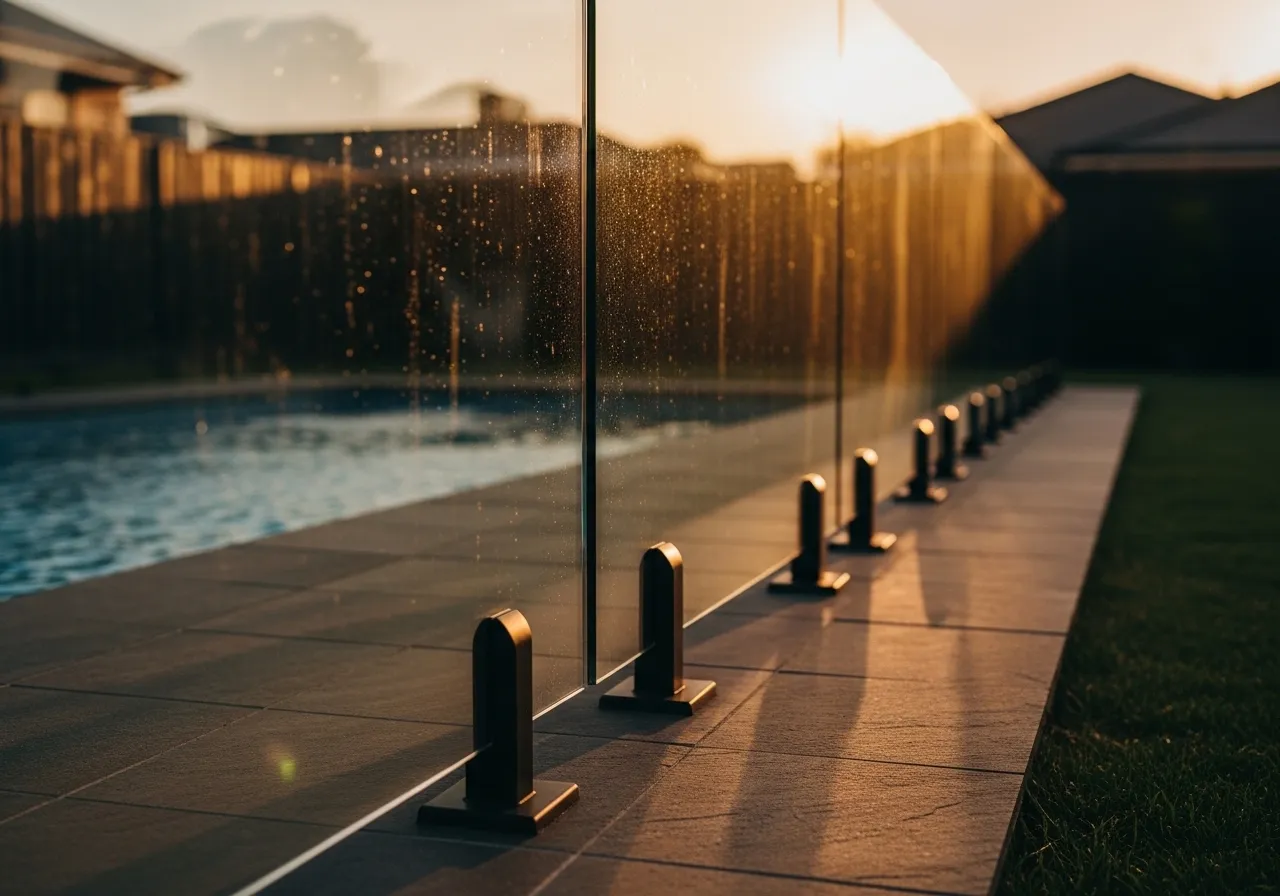
Glass vs Aluminium
Pool fencing, honestly compared
Aluminium is roughly a third of the price of frameless glass and passes exactly the same standard. This is what the difference buys, and when it is not worth buying.
Glass or aluminium, in one paragraph
Compliant tubular aluminium is substantially cheaper to install than frameless glass, for two barriers that keep a child out equally well and certify identically.
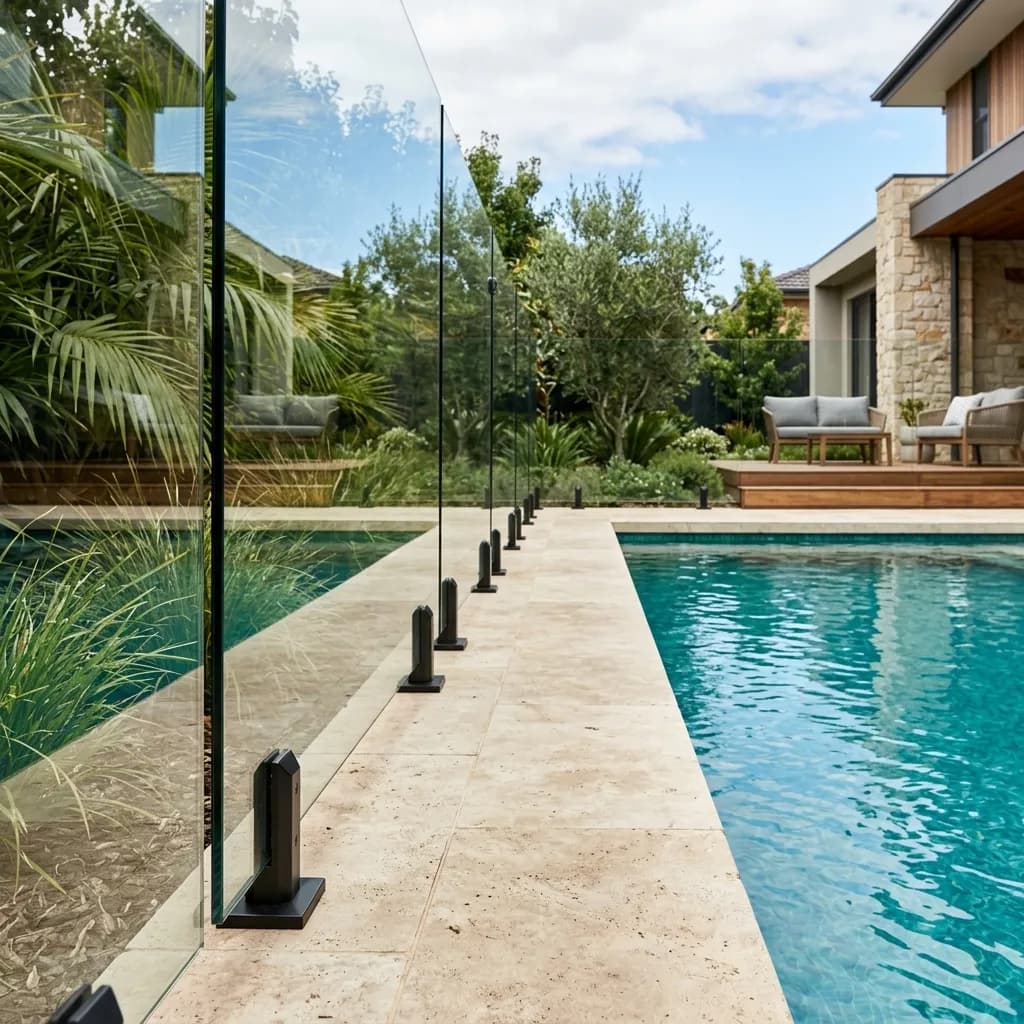
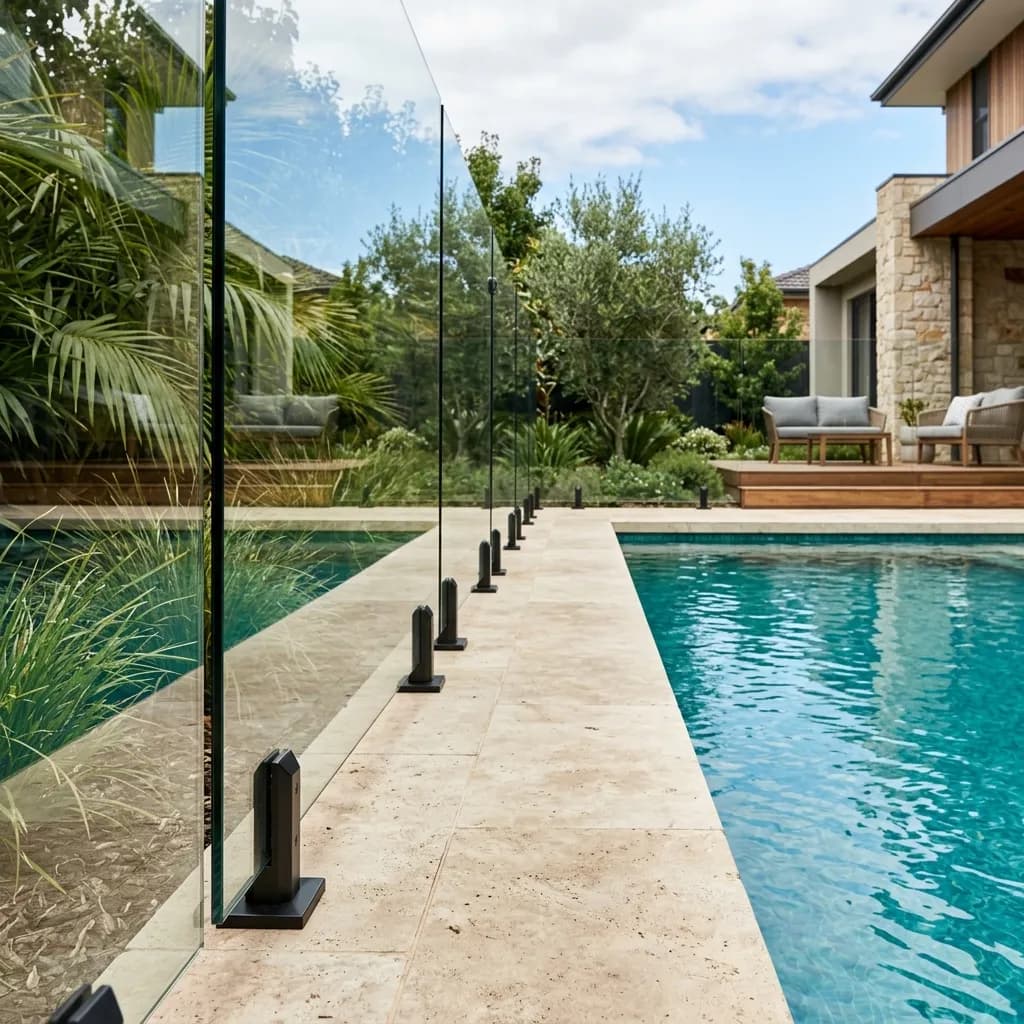
You are buying a sightline, and nothing else. Glass lets you see the pool from the house and lets the garden read as one space. Aluminium is a fence: it does the safety job faultlessly and it looks like a fence.
Where that matters most is supervision and resale. Being able to see the water from the kitchen is a real, daily benefit if you have young children. And on a landscaped pool that is a selling feature of the property, an aluminium barrier visually chops the garden in half.
Where it matters least is a pool boxed into a side return, or a rental, or a pool you are fencing to satisfy a compliance notice on a house you are about to sell. In those cases aluminium is the sensible answer and glass is money spent on nothing.
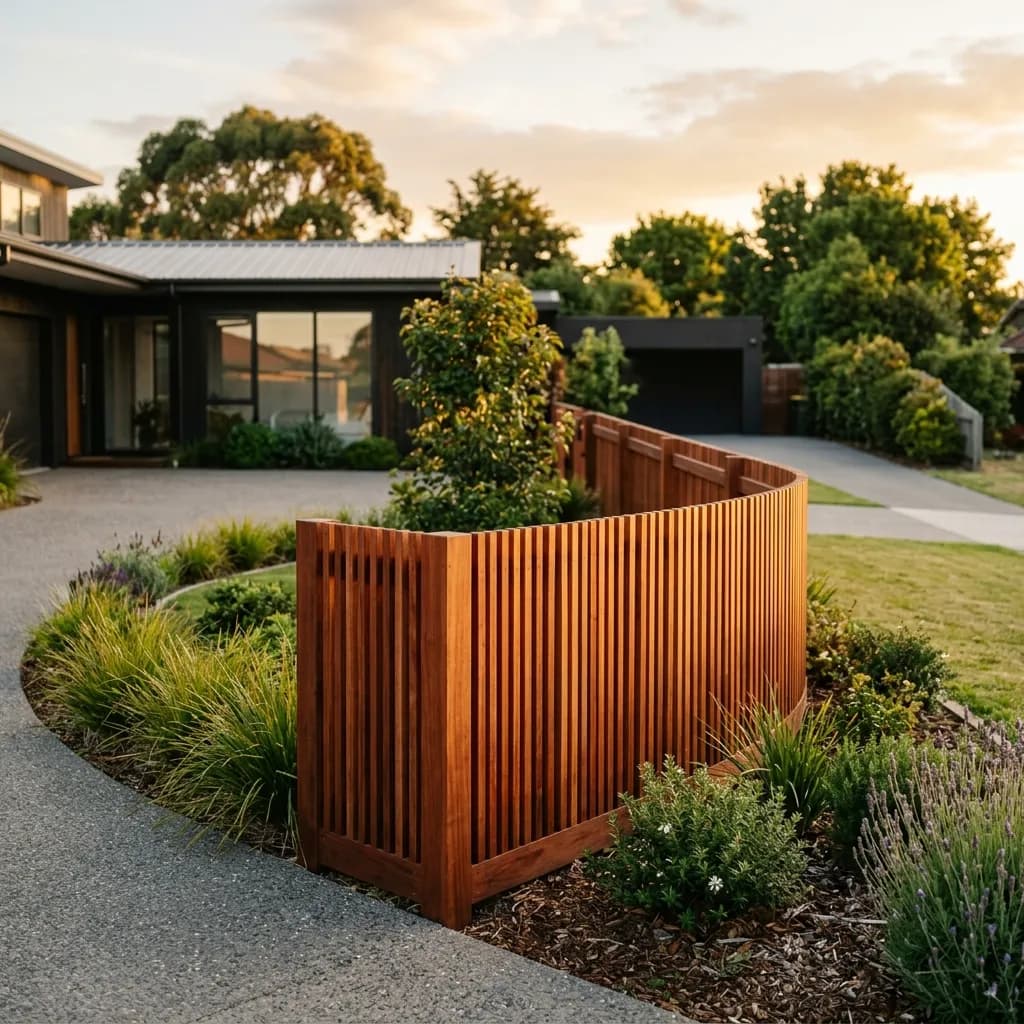
Glass vs aluminium pool fencing
Three compliant options. Everything in the compliance rows is identical, which is the honest starting point for this decision.
| Aluminium tubular | Semi-frameless glass | Frameless glass | |
|---|---|---|---|
| Complies with AS 1926.1 | Yes | Yes | Yes |
| View through the barrier | Blocked by verticals | Clear, posts visible | Clear, nearly invisible |
| Supervision from the house | Partial | Good | Excellent |
| Cleaning to look right | Occasional hose | Regular wipe down | Regular wipe down |
| Realistic lifespan | 25 – 30 years | 25+ years | 25+ years |
| Salt or chlorine exposure | Unaffected | Spigot grade matters | Spigot grade matters |
| Impact damage | Dents, repairable | Panel replacement | Panel replacement |
| Adds to resale | Rarely | Sometimes | Often, on a feature pool |
Comparison assumes a flat, accessible barrier line and correct installation. Gates and certification are additional and identical across all three. Reviewed September 2026.
Five things that should settle it
Compliance is not one of them, because all three options pass. These are what actually differ.
Can you see the pool from the house?
If the barrier sits between your living area and the water, glass is worth serious consideration, particularly with young children. If the pool is out of sight anyway, glass buys you nothing you will experience.
Are you selling soon?
A compliance notice before a sale is best answered with the cheapest certified barrier, which is aluminium. Glass only pays back on a feature pool that the listing photos will lead with.
Is the pool landscaped?
On a designed garden, an aluminium barrier cuts the space visually in half. On a rectangular pool between two side fences, there is no composition for glass to preserve.
Who will maintain it?
Glass needs wiping to look like glass. On a rental or a holiday house that nobody wipes down, glass ends up looking worse than aluminium that was never expected to sparkle.
How much barrier do you need?
The gate and certification cost the same either way. On a very short run those fixed costs dominate and the material choice matters less than people expect.
Four things worth knowing first
We install both, and certify both. These are the misconceptions that cost pool owners money or a failed inspection.
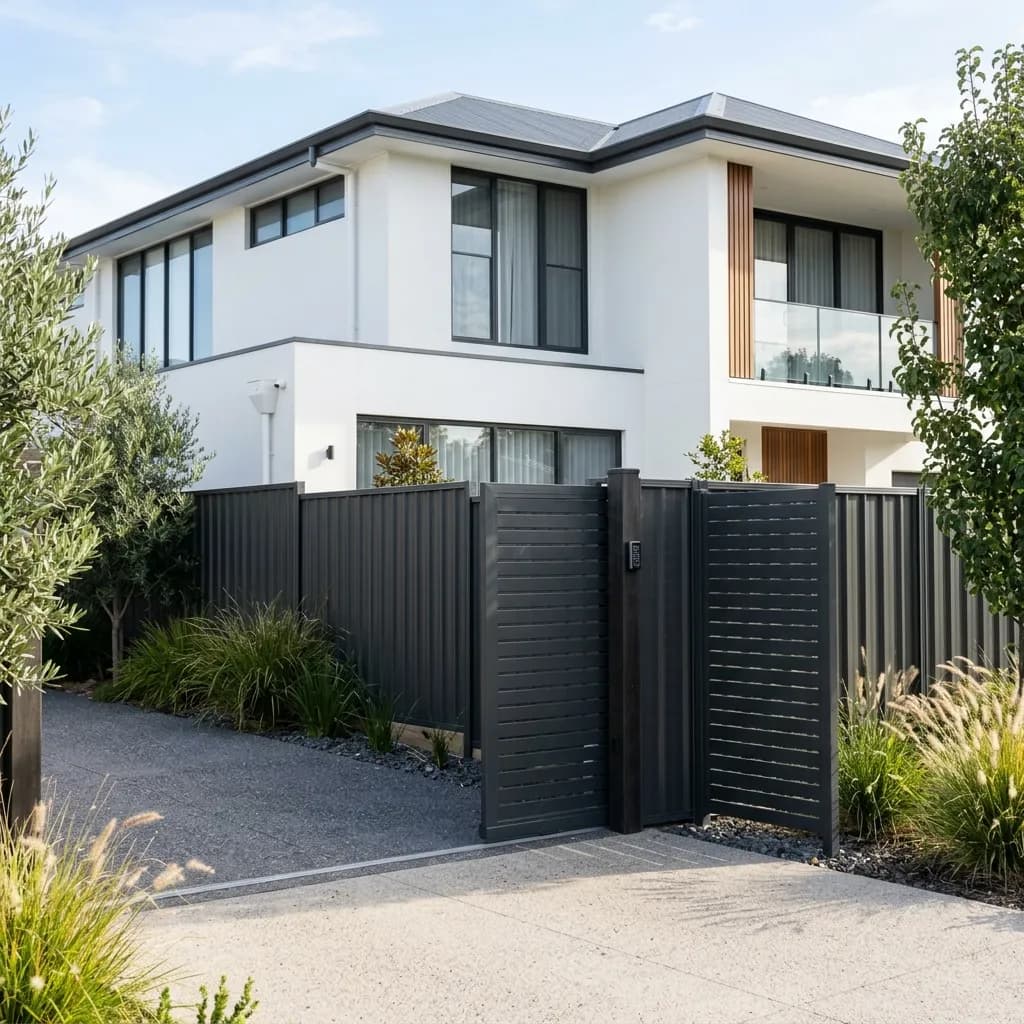
Gates and clearances, never the material
In our experience, pools fail on a gate that no longer self-closes or on something climbable inside the non-climbable zone. Neither is fixed by spending more on the fence.
Glass is not more compliant
Tubular aluminium built to AS 1926.1 passes the same inspection as frameless glass. If a quote implies otherwise, that is a sales position rather than a regulatory fact.
The barrier is not the whole barrier
AS 1926.1 requires a clear non-climbable zone either side. A planter, pump housing, retaining wall or low branch inside it fails the pool regardless of what the fence is made of.
Fixings matter more than material
On glass, 304 spigots tea-stain within a couple of seasons on a salt pool. On aluminium, check the powder coat spec. Both are cheaper to get right at install than to fix later.
Certification is recurring
Victorian pools must be registered with the council and re-certified every four years. Whichever barrier you choose, budget it as an ongoing cost rather than a one-off.
People who had this exact decision
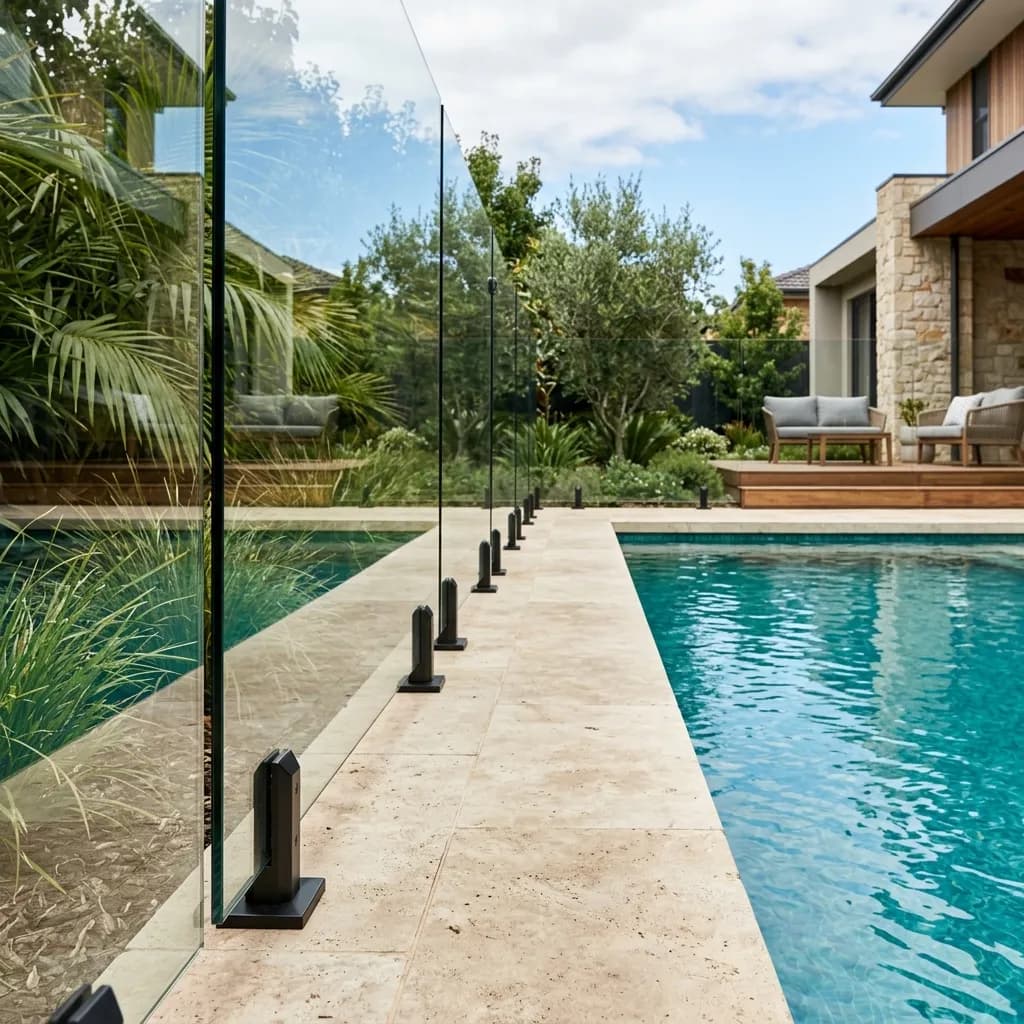
“Selling within the year and needed a compliance certificate. They said plainly that aluminium was the sensible spend and glass would not come back in the sale price. It did not.”
“Toddler and a pool you could not see from the kitchen. Glass was not about looks for us, it was about being able to watch her. Worth every dollar.”
“They flagged the pump housing sitting inside the non-climbable zone before quoting anything. Two other quotes had missed it entirely.”
Pool fencing across Melbourne
Bayside
Known for salt exposure, which narrows the sensible options.
Glass vs aluminium pool fencing questions
What owners ask when weighing the cheapest compliant option against the best-looking one.
Ask us about your poolYes. Powder-coated tubular aluminium built to AS 1926.1 is fully compliant and certifies exactly like glass. The standard governs gaps, heights, the non-climbable zone and gate behaviour, not the material.
Related comparisons and guides
Frameless vs Semi-Frameless
If you have settled on glass, this is the next decision.
Read more GuideNon-Climbable Zone Rules
The clearance requirement that fails more pools than the fence does.
Read more GuideRegistering a Pool in Victoria
What you must lodge with the council, and when.
Read more ComparisonAll Fence Comparisons
Every side-by-side we have, in one place.
Read more
Get a compliant quote for your pool
We assess the barrier line and the non-climbable zone first, then price glass, aluminium, or a mix. Free, and it can actually be certified.