Acoustic Fencing
Melbourne
Sound-barrier fencing that takes the edge off road, rail and neighbour noise. Dense, Rw-rated panels with no gaps for sound to leak through, from residential runs to VicRoads-compliant highway systems.
How Acoustic Fencing Works
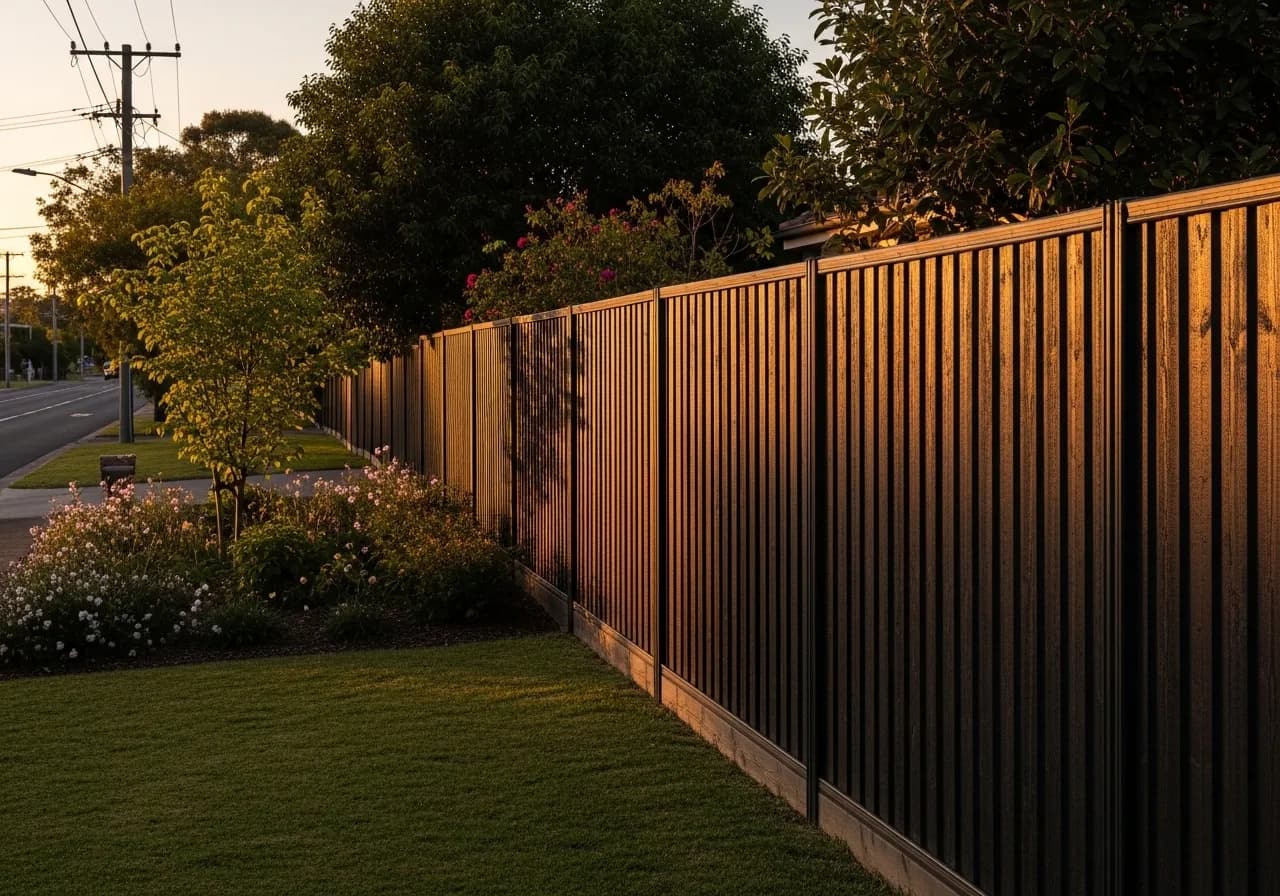
Acoustic fencing uses mass, density, and airtight construction to block the path of sound waves. Unlike standard fencing, acoustic panels are solid-core (no gaps between boards), use mass-loaded vinyl or dense infill, and are structured to eliminate flanking paths at the base and top.
We supply residential and highway-grade acoustic fencing systems independently tested to AS/NZS 1276.1. Effective noise reduction of 15–25 dBA is achievable depending on height and construction, sufficient to bring most Melbourne main-road properties within acceptable ambient levels.
Different noise, different fence
The right specification depends entirely on what you are trying to block. Pick your noise source for an honest recommendation, a realistic result, and a straight answer on whether a fence is even the right spend.
a noticeable drop when line of sight to the traffic is broken. A 10 dB reduction is heard as roughly half as loud, and that is the honest goal we work to.
A strong candidate. Ground-level traffic that you can see over the fence is exactly what a mass-and-seal barrier is built to soften.
If the road sits on an elevated overpass above your roofline, a boundary fence cannot break the line of sight and the spend is hard to justify.
Guidance only. Every result depends on your source, the distance and site conditions. We confirm the specification and the range you can reasonably expect at a free on-site assessment before you commit.
What makes a fence quiet is not the brand
Every effective acoustic fence gets these three things right, in sequence. Miss any one and the panel above it is wasted.
Mass
Sound is energy. A dense, heavy panel reflects far more of it than a thin one. Effective barriers start around 10 kg/m² of surface mass and climb from there. This is why an acoustic panel is heavy and a standard fence is not.
Seal
A barrier is only as good as its worst gap. Sound flows through openings like water. A gap at the base or an open join can undo an otherwise good panel, so joins are butt-tight and the base is sealed to the ground.
Line of sight
The fence has to break the straight line between your ears and the source. Sound bends over the top and re-forms with distance, so height and how close the barrier sits to the source drive the real-world result.
What actually moves an acoustic price
A cheap-per-metre acoustic quote usually skips one of these. Here is what to check before you sign, because with acoustic fencing the wrong spec is worse than no fence at all.
Height to the source
The fence has to break the line of sight to the noise. A source you can see over the fence needs a taller panel, and height adds mass, posts and labour per metre.
Panel mass
Heavier panels block more sound but cost more and need deeper footings. The right surface mass depends on your source, not on the biggest number on a brochure.
Panel system
Colorbond acoustic, solid timber and modular panels sit at different price points. A mass-loaded vinyl core can be added where a source needs extra low-frequency blocking.
Site access
Rear-lane-only or tight side access slows delivery of heavy panels and the dig for deeper footings, which an honest quote accounts for.
Ground & footings
Acoustic posts sit in engineered footings, deeper than a standard fence. Sloping or stepped ground means more posts and raking, priced after a site check.
Reports & permits
A noise assessment, an engineering certificate or a council permit are quoted as line items, not hidden in the metre rate, when your site needs them.
A lab rating is not what you get in the backyard
We assess your source and site first, then tell you the range you can reasonably expect. If a fence is not the right fix for your noise, we will say so.
Panel data sheets quote a laboratory Rw rating measured in a sealed test chamber. It is a real number, and it is not the number you experience at home.
On a real boundary, with a real gap under the fence and sound diffracting over the top, the reduction you actually notice is a fraction of the lab figure. We quote you a realistic range for your site, never the sticker on the panel.
The honest goal. As a rule of thumb, a 10 dB reduction is heard as roughly half as loud. That is a genuine, worthwhile change, and it is the honest goal, not the headline dB on an advert.
Acoustic fencing cost Melbourne
What a complete acoustic install includes: solid-core panels, heavy posts in engineered footings and a sealed base. We give you a firm, itemised price at your free on-site measure.
What an acoustic fence is made of
Panel & mass
Posts & footings
Testing & seal
Installation Process
 01
Noise Assessment & Design
We assess noise source, direction, and frequency profile. Height and panel specification recommended.
 02
Engineering & Permitting
Engineering certificate prepared for post footings. Council permit lodged if required.
 03
Post Installation
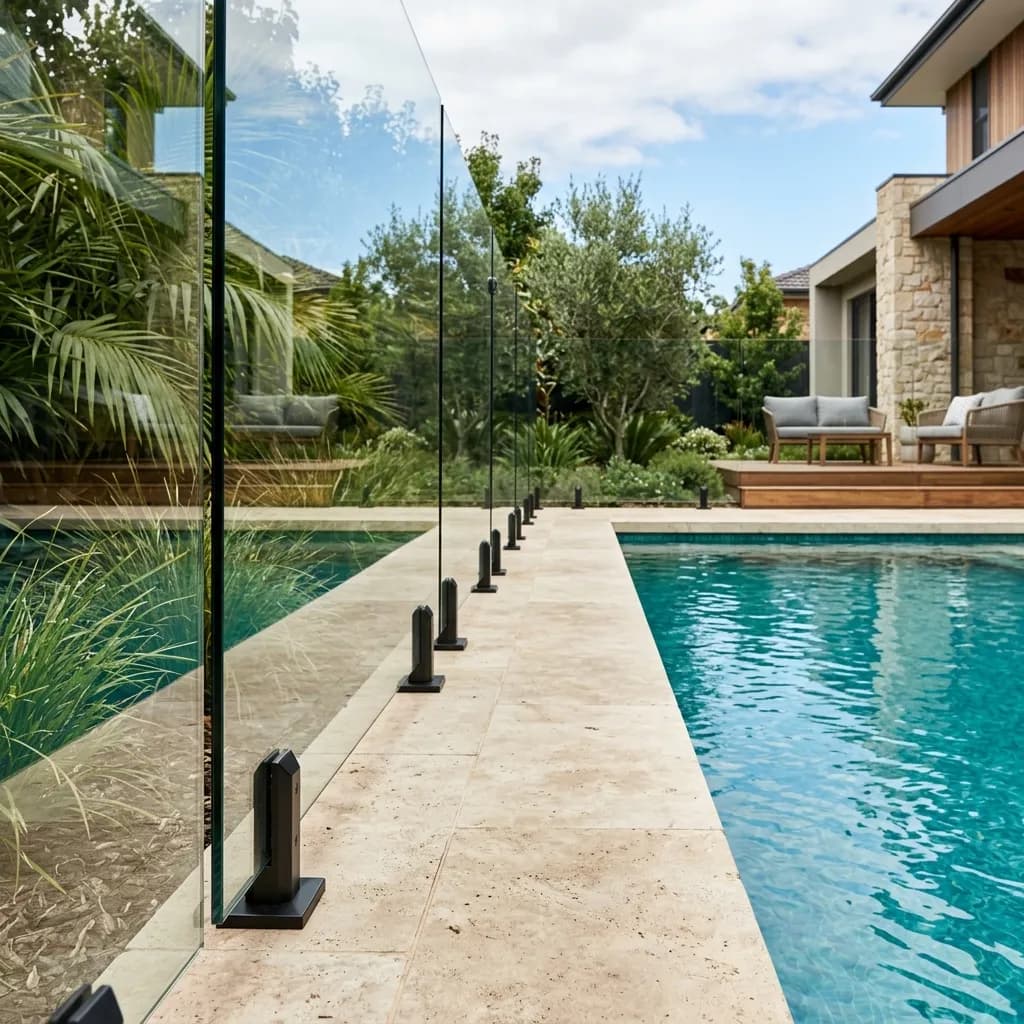
Heavy-duty posts concreted to engineered footing depth. Posts must be absolutely plumb, no gaps at ground level.
 04
Panel Installation
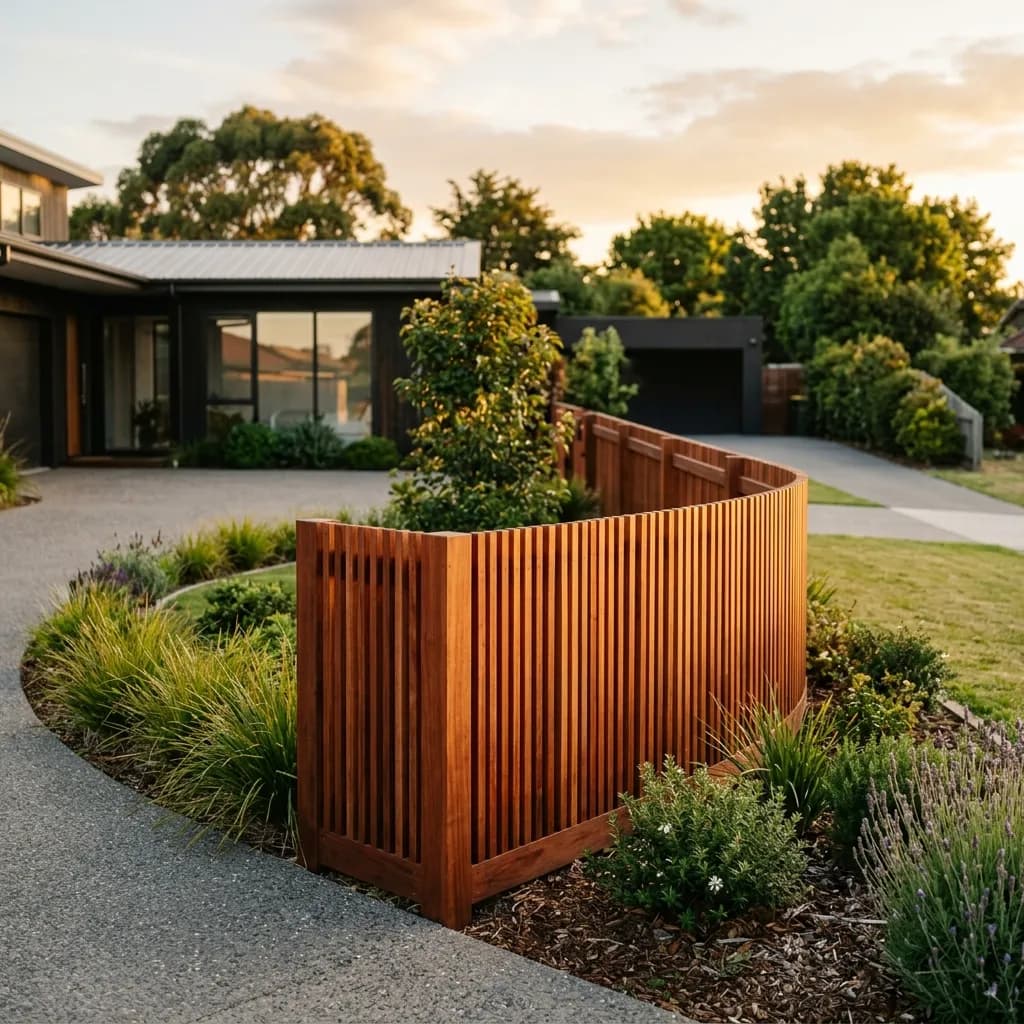
Acoustic panels installed with butt-tight joins. No air gaps permitted. Base sealed to ground.
 05
Post-Installation Assessment
Noise reduction effectiveness verified. Certificate issued for VicRoads or council requirements.
Why Choose Us For Acoustic Fencing
We engineer for actual noise reduction, not just the look of it.
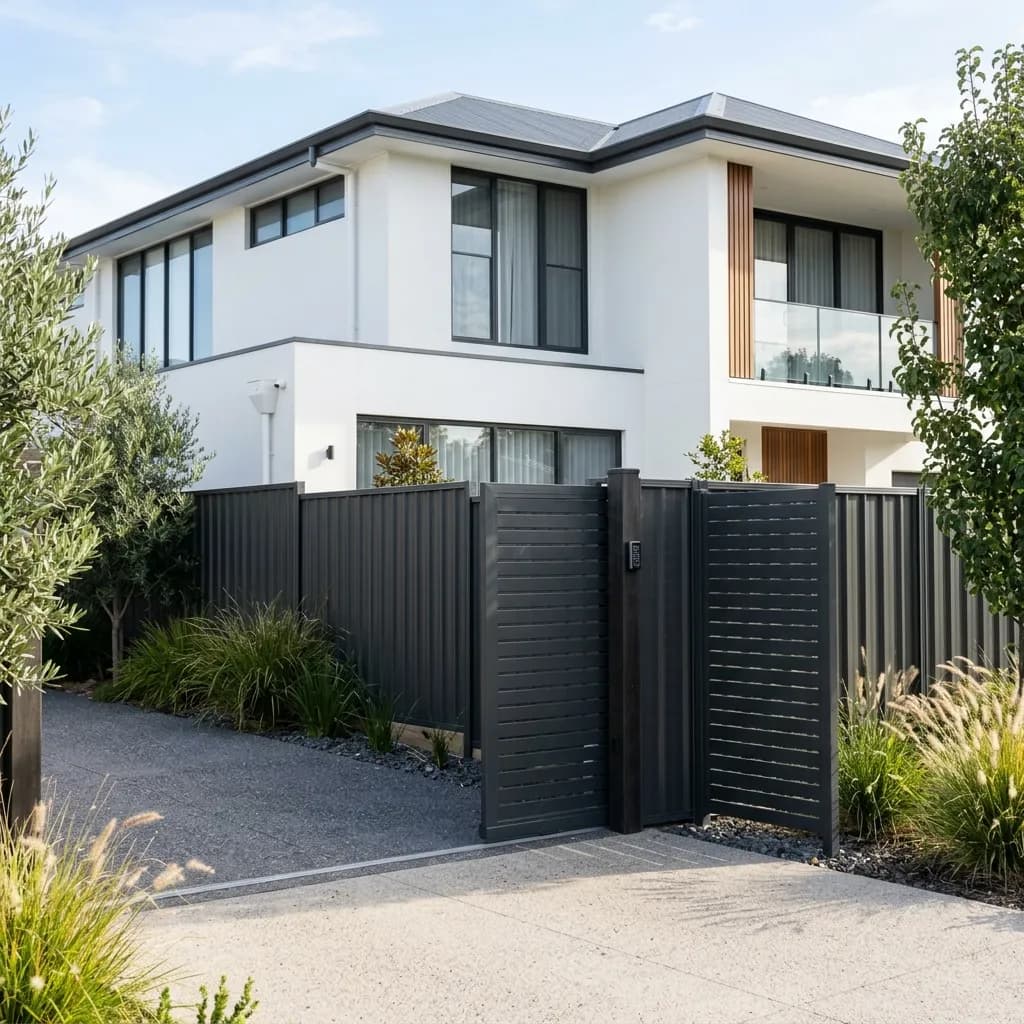
The seal is the spec. We guarantee zero air gap.
Butt-tight panels and a base sealed to the ground, because a single base gap can undo an otherwise good panel.
Independently Tested Panels
We only use panels with published AS/NZS 1276.1 Rw test data. No unverified claims.
VicRoads Approved
Authorised to install VicRoads-specification highway acoustic barriers on approved projects.
Zero Air Gap Guarantee
Acoustic effectiveness depends on zero air gaps. We guarantee airtight panel and footing installation.
Noise Assessment Service
We conduct or commission noise assessments to determine the correct specification before quoting panels.
Acoustic fencing questions
The honest answers on what a fence can and cannot do for your noise. If it is the wrong fix for your source, we will tell you before you commit.
Ask us about your noiseA well-specified residential acoustic fence typically reduces perceived noise by 5–15 dBA. This equates to noise being half to one-quarter as loud as without the fence, a significant and noticeable reduction.
Acoustic fencing across Melbourne
Bayside
Known for arterial roads and coastal exposure.
Other ways we fence a boundary
Ready for a straight acoustic quote?
Free noise-and-boundary assessment · honest reduction range · all Melbourne suburbs, with a 10-year workmanship guarantee.