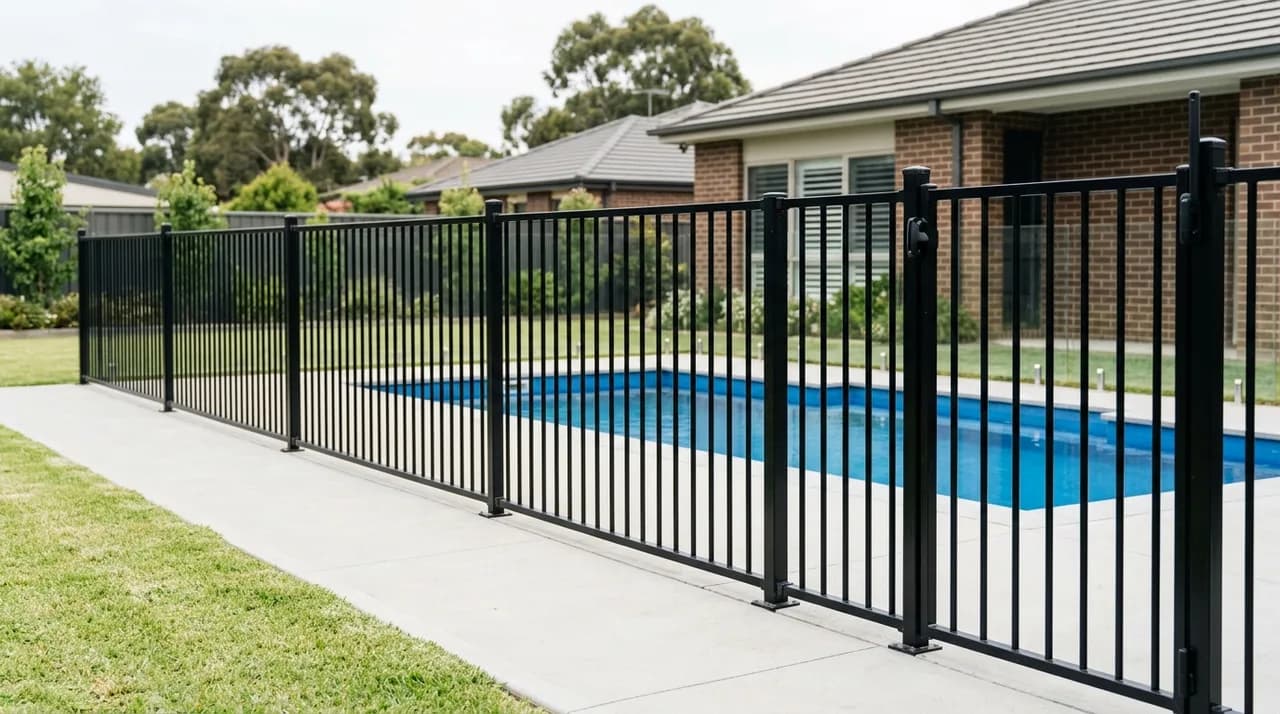
Pool Fencing Regulations Victoria
Every swimming pool or spa in Victoria that can hold more than 300mm of water must have a compliant safety barrier, be registered with the local council, and hold a current certificate of barrier compliance renewed every four years. Which barrier rules apply depends on when the pool was built. This page sets out the three standards, the registration and certificate process, the forms, and where a building permit comes into it.
Which standard applies to your pool
Victoria does not apply one barrier standard to every pool. Under the Building Regulations 2018, the rules that apply are the rules that were in force when the pool or spa was built, so an older barrier is judged against an older standard rather than the current one. That matters in practice: a fence that would fail a brand-new pool may be fully compliant on a 1995 pool, and the inspector's first job is to confirm the construction date. There are three bands. For anything built or installed from 1 May 2010 the standard is AS 1926.1-2012. For pools built between 8 April 1991 and 30 April 2010 it is the earlier AS 1926.1 that applied at the time. For pools built before 8 April 1991 the requirements are older again and generally less demanding, though the barrier must still be maintained as it was required to be. Regardless of the band, three things apply to every Victorian pool: it must be registered with council, it must hold a certificate of barrier compliance, and that certificate must be renewed on a four-year cycle.
This page is general guidance, not legal advice. Pool barrier rules in Victoria depend on when your pool was built and are set by your council. Always confirm the requirements that apply to your property with a VBA or Building and Plumbing Commission registered inspector before you rely on anything here.
Before anyone measures a fence, the question is: when was the pool built?
Owners are often surprised that their older barrier passes, or that a newer one fails on a rule they had never heard of. Both come back to the build date. If you are buying a house with a pool, get the construction date and the last Form 23 before settlement. If you are renovating a pool, note that some alterations bring the barrier up to the current standard, which can turn a compliant older fence into one that needs replacing.

The rules that apply to a pool built from 1 May 2010
Tap through each requirement to see it on the barrier, then tick the ones your pool already meets. This is the sequence a registered inspector follows, offered as general guidance.
The barrier must measure at least 1200mm from the finished ground or paving to the top of the fence. Every low point around the pool is measured, so a garden bed or retaining wall can quietly drop you under.
General guidance for Victorian property owners, current at time of writing. It is not legal advice and does not cover every situation. The Victorian Building Authority function is moving to the Building and Plumbing Commission. Confirm the standard that applies to your pool and the current requirements with your council and a registered building surveyor or inspector.
Every option below meets the standard. The difference is the look.
Now showing: Aluminium tubularTubular aluminium
Vertical tube with the spacing set to the standard, so the 100mm gap rule is built into the panel. The most economical way to bring an old pool up to the current rules.
Build a live estimate, no email required
Configure your barrier to see what a complete install includes. The certificate of compliance and gate hardware are part of every job. We give you a firm, itemised price at your free on-site measure.
The numbers behind a compliant barrier
Every barrier is engineered to AS 1926.1-2012 and installed with marine-grade hardware. This is the drawing an inspector reads.
Dimensions and clearances
Materials
Gate and standard
Compliance is not a one-off, it runs on a cycle
Under Victoria's pool and spa barrier laws, every owner typically moves through the same four stages. We handle the parts that need a registered inspector. This is general guidance, not legal advice.
Register with council
Mandatory since 1 December 2019 for every pool and spa. Registration records the build date and sets the first inspection due date.
Inspect against the right standard
A registered building surveyor or inspector checks the barrier against the standard for the pool's build date and issues a Form 23 or Form 24.
Lodge the form
A Form 23 is lodged with council within 30 days. A Form 24 lists the defects and gives 60 days to rectify before it is lodged.
Renew the certificate
A new Form 23 is required every four years. Council writes to the owner when it falls due.
Pool fence installation process
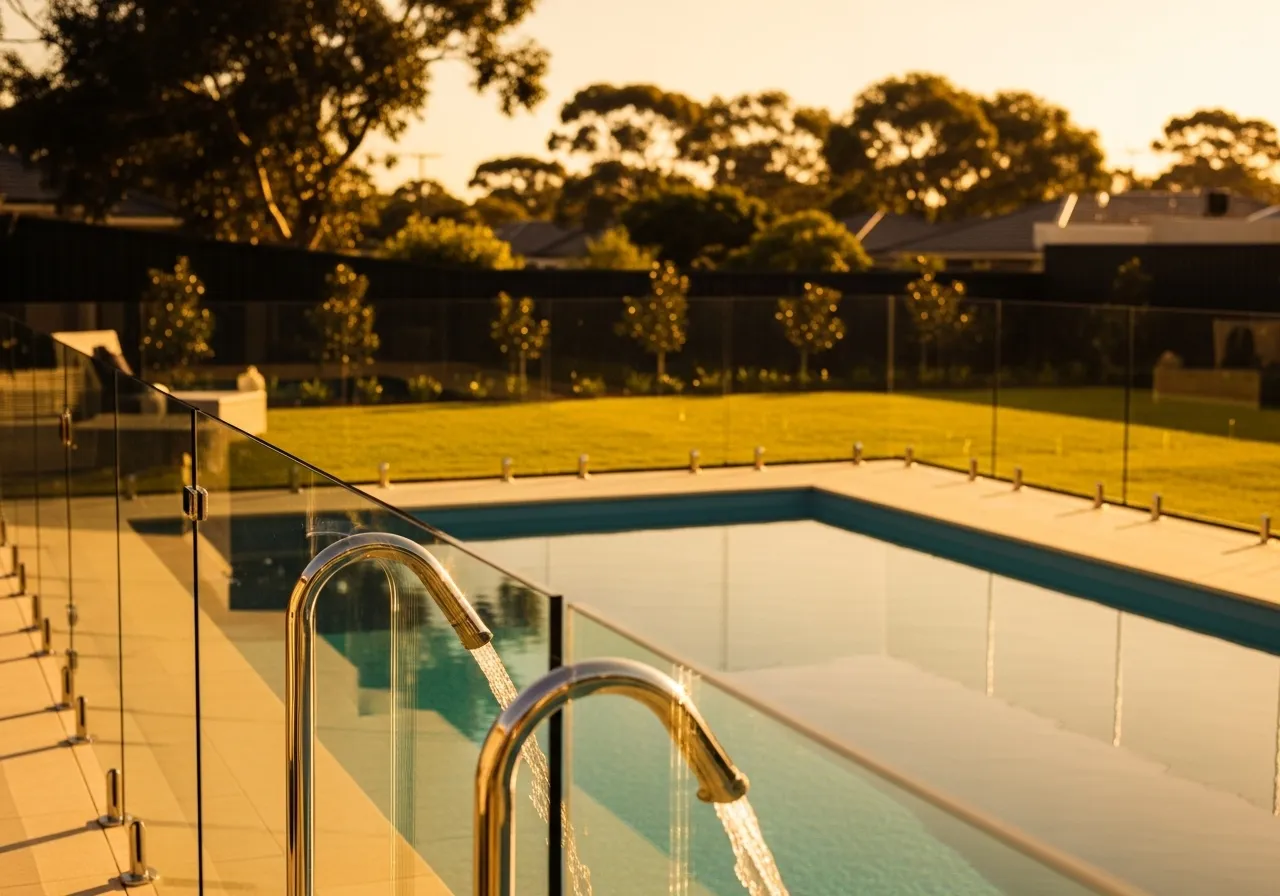
Establish the build date
From council records, a building permit, or the previous certificate. This sets the standard everything else is measured against.
Check registration
If the pool is not registered, we help you lodge the registration so the inspection has something to attach to.
Design or assess to the standard
A new barrier is designed to the current rules. An existing one is assessed against the rules for its date, which is often kinder than owners expect.
Permit where required
A new barrier, or a significant alteration to one, generally needs a building permit. Repairs and like-for-like replacement usually do not. We confirm with council.
Inspect, lodge, diarise
A registered inspector issues the form, we lodge it, and we record the four-year renewal date.
We build to the standard for your pool's date, not to a guess.
The most expensive mistake in pool compliance is fixing to the wrong standard: either replacing a compliant older barrier because someone applied the 2012 rules to a 1998 pool, or building a new barrier that misses a rule the current standard added. The date comes first, always.
Build date before design
We establish which standard applies before anything is measured or quoted.
Permit call made with council
We confirm whether your work needs a building permit rather than assuming either way.
Forms handled end to end
Registration if needed, the inspection booked, the Form 23 lodged, the renewal diarised.
Older pools assessed fairly
A pre-2010 barrier is judged against its own standard. We tell you what actually has to change, and what does not.
Pool fencing, answered
Straight answers on cost, compliance and the parts of the process people worry about most.
Still have questions? Call usEvery four years. Since 1 December 2019, every Victorian pool and spa must be registered with council and hold a certificate of barrier compliance (Form 23) renewed on a four-year cycle. Council notifies you when it is due.
Pool fencing across Melbourne
Inner Melbourne
Known for many pre-1991 and 1991-2010 pools, where the build date does most of the work.
Related pool fencing topics
Ready for a certifiable
pool barrier?
Free measure · same-day quote · certificate of compliance handled end to end.