Colorbond vs Aluminium
Where the premium is worth it
Both are metal, both last decades, and one costs around fifty per cent more. This is what the extra actually buys, and the boundaries where it buys you nothing.
Colorbond or aluminium, in one paragraph
Colorbond does the job of a boundary fence better than aluminium does, for less money. It is a solid sheet, so it gives total privacy, and nothing gets through it.
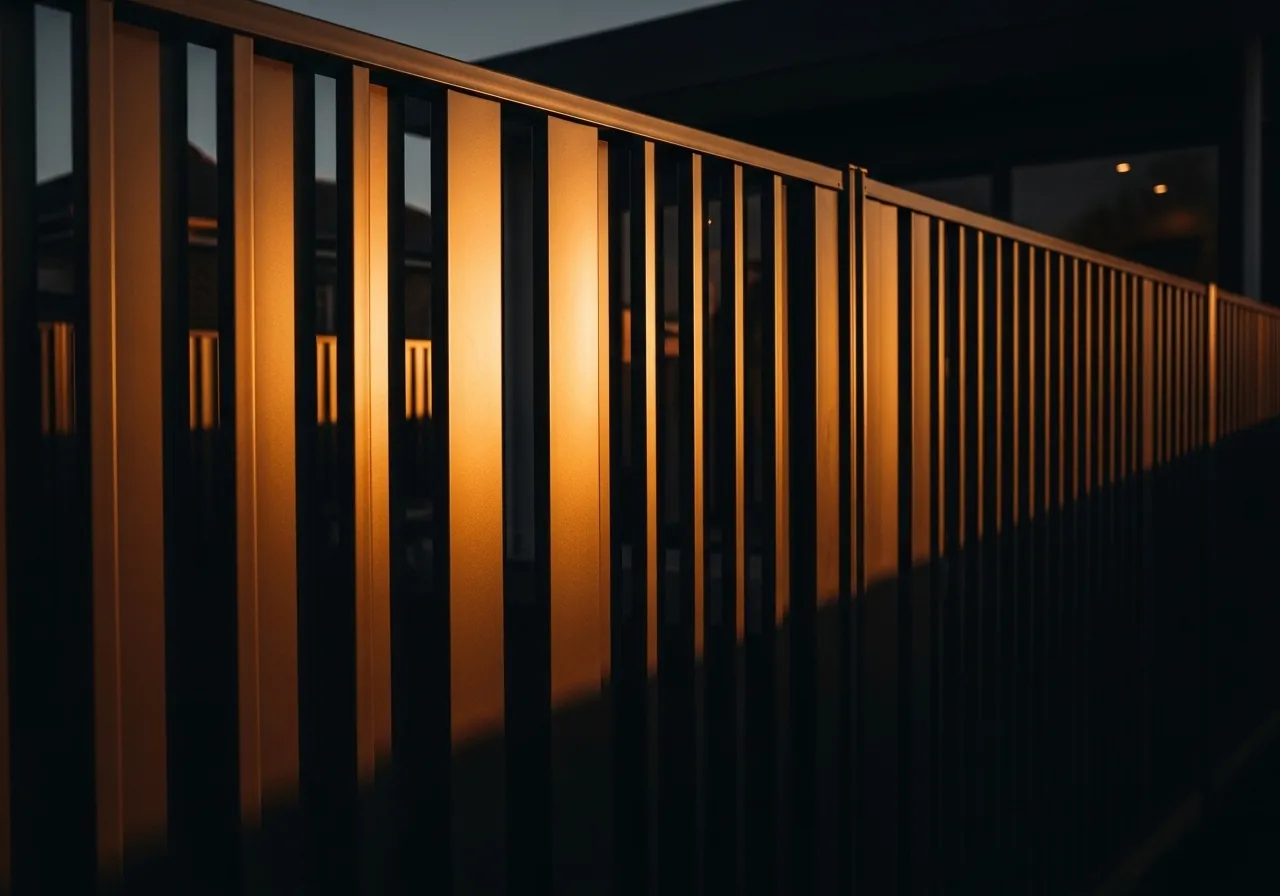
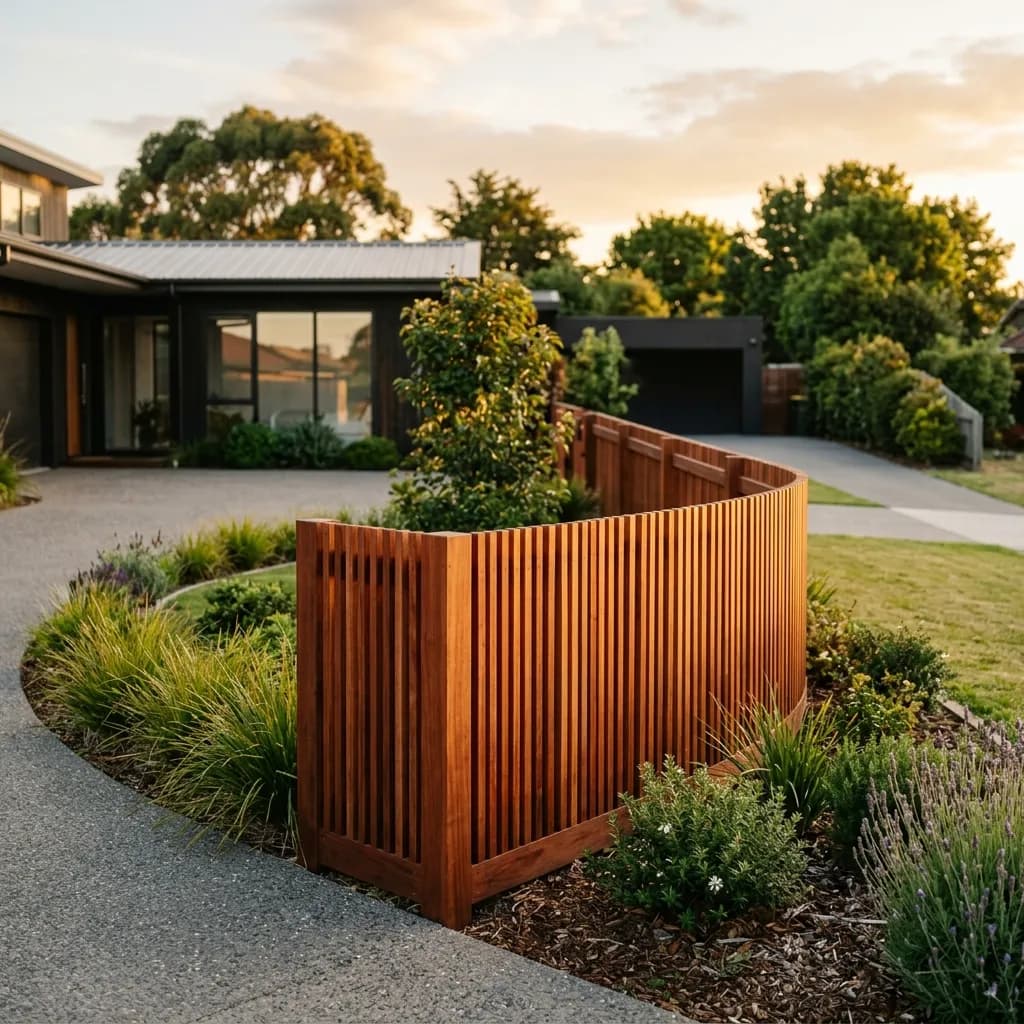
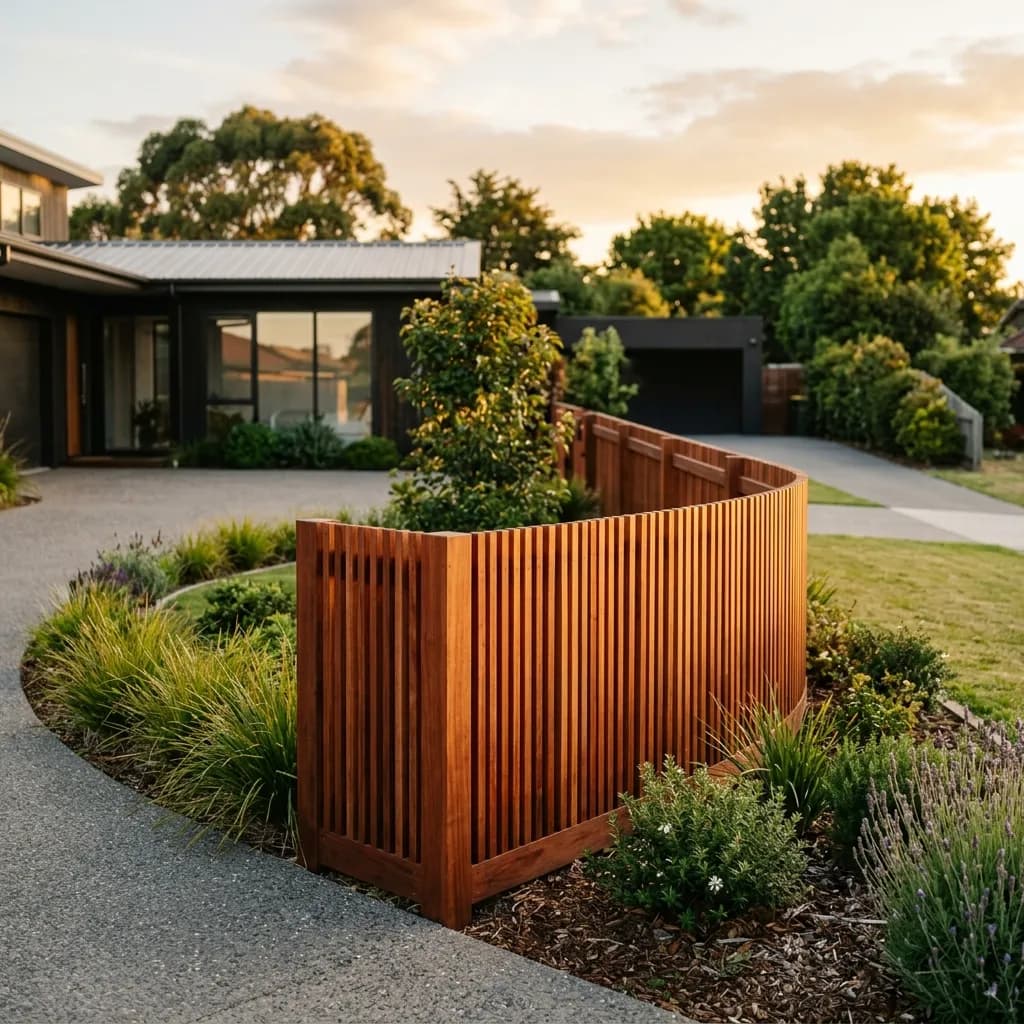
Aluminium slat is not trying to be a boundary fence. It is an architectural screen. The slats have deliberate gaps, so you get filtered light, airflow and a sightline, and you do not get full privacy. That is a feature, not a shortfall, and it is the whole reason to pay more.
The other real difference is corrosion. Colorbond is coated steel, and once that coating is breached at a cut edge or a scratch near salt air, it can rust. Aluminium does not rust at all. Within a few streets of the bay, that alone can decide it.
Short version: Colorbond for rear and side boundaries and for privacy. Aluminium for front fences, gates, pool surrounds, courtyard screens and anywhere within sight of salt water.
Colorbond vs aluminium, compared properly
These two get compared because they are both metal and both last. In use they do quite different jobs, which is what the table below is really showing.
| Colorbond steel | Aluminium slat | |
|---|---|---|
| Realistic lifespan | 20 – 25 years | 30+ years |
| Rusts? | Yes, at cut edges and scratches | No, aluminium does not rust |
| Near salt water | Shortened life, warranty conditions apply | Unaffected |
| Privacy | Total, no gaps | Partial, gaps between slats by design |
| Airflow through the fence | None | Yes, which suits hot courtyards |
| Weight | Light sheet | Light, easy to hang as a gate |
| Look | A fence | An architectural screen |
| Best used for | Rear and side boundaries | Front fences, gates, screens, pool surrounds |
Comparison assumes flat, accessible ground and correct installation. Reviewed September 2026.
Five things that should settle it
The price gap is real but it is not the deciding factor for most people. One of these usually is.
Do you need to see through it?
This is the whole decision in one question. If you want the boundary solid, Colorbond, and you will save money. If you want light and a sightline through, aluminium, and no amount of Colorbond will do it.
How close is the salt?
Within a few streets of the bay, Colorbond warranties carry conditions and cut edges are the weak point. Aluminium removes the question entirely. In Brighton, Sandringham or Williamstown this often decides it on its own.
Is it a gate?
Aluminium is the better gate material at almost any budget. It is light, it does not sag, and a slat gate reads as intentional in a way a sheet-steel gate rarely does. Many jobs use Colorbond fence with aluminium gates.
Is it the front of the house?
A front fence is part of the facade. Aluminium slat looks designed; a solid Colorbond wall at the street usually does not, and some estate covenants prohibit it outright.
How hot is the space?
A solid fence around a small courtyard traps heat and stops breeze. Slats let air move. On a north or west-facing courtyard that is a genuine liveability difference, not a detail.
Four mistakes on this decision
These come up repeatedly, and three of the four cost real money to undo once the fence is in.
Most properties want both, in different places
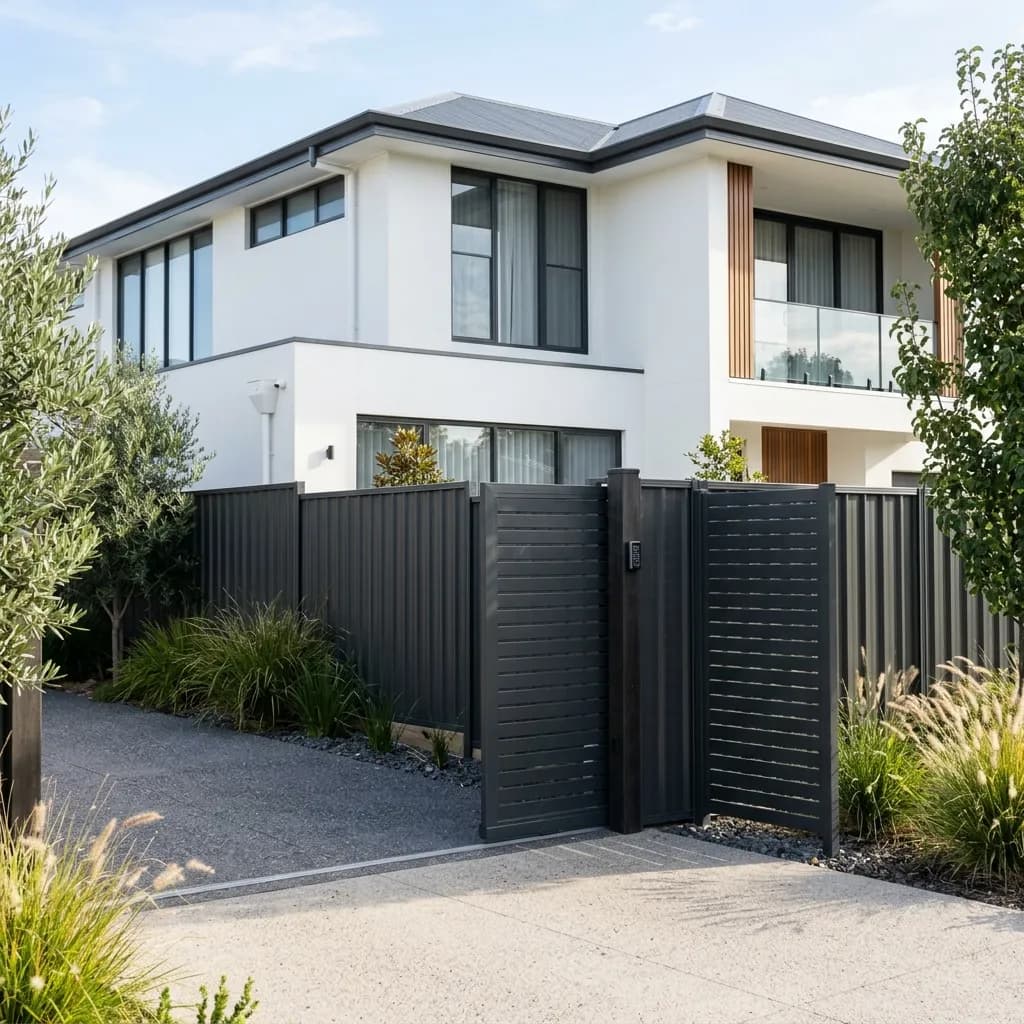
Colorbond down the sides and back where privacy and cost matter, aluminium at the front and on the gates where the fence is part of the house. It is the most common outcome once people stop treating it as a single choice.
Expecting privacy from slats
People choose aluminium slat for a rear boundary, then discover the neighbour can see through it. Slats can be tightened to near-solid, but at that point you have paid an aluminium premium for a Colorbond outcome.
Colorbond near salt
The coating protects the face, not the cut edge. Within sight of the bay, exposed cut edges are where corrosion starts, and it is the reason coastal Colorbond fences age faster than inland ones.
Assuming all aluminium is equal
Aluminium does not rust, but a thin powder coat still chalks and fades in Australian UV. Ask for the coating spec and its warranty, not just the metal.
Treating it as either/or
The best answer on a lot of properties is both: Colorbond where it is a boundary, aluminium where it is seen. Quoting it as one job usually costs less than people assume.
People who had this exact decision
“Two streets from the beach. They explained why Colorbond cut edges are the weak point here and we went aluminium. No regrets four summers in.”
“Colorbond down both sides, aluminium slat and a matching gate at the front. Costs less than doing the whole thing in aluminium and looks better than doing it all in Colorbond.”
“I had assumed slats would give us privacy. They were straight that they would not, and we picked Colorbond for the back instead. Saved us a expensive mistake.”
We build both across Melbourne
Bayside
Known for salt exposure, which narrows the sensible options.
Colorbond vs aluminium questions
What people ask once they are choosing between the two metals.
Ask us which suits your boundaryYes. Aluminium slat runs roughly a third to a half more than Colorbond at the same height. The gap is material cost, not labour.
Related comparisons and guides
Colorbond vs Timber
The most common Melbourne boundary decision, costed over twenty years.
Read more ComparisonGlass vs Aluminium Pool Fencing
The same aluminium, doing a very different job around a pool.
Read more ComparisonAll Fence Comparisons
Every side-by-side we have, in one place.
Read more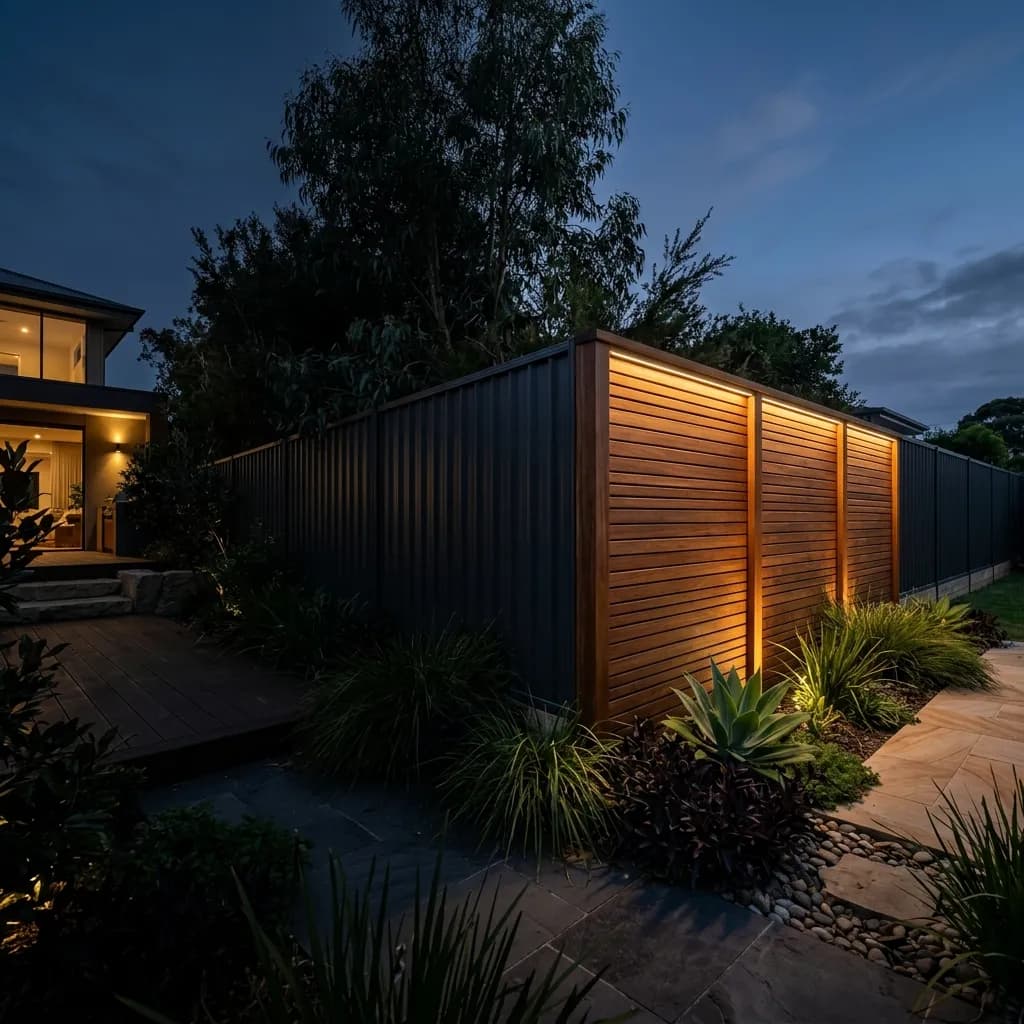
Get both quoted for your boundary
We will measure once and price Colorbond, aluminium, or a sensible mix of the two. Free, same-day response.