How Long Does
a Fence Last?
Honest lifespans by material for Melbourne conditions, the four things that shorten them, and why the part that fails is almost never the part you can see.
Realistic lifespans in Melbourne
Treated pine paling lasts 15 to 20 years, hardwood 25 to 30, Colorbond 20 to 25, and aluminium 30 or more. Glass pool fencing outlasts all of them because glass does not degrade; its hardware is the limiting factor.
Those ranges assume the fence was built properly. The single biggest variable is not the material at all: it is the posts, their treatment level and how deep they were set. A hardwood fence on shallow H3 posts will fail long before a pine fence on deep H4 ones.
The second biggest variable is water. Timber that stays wet rots, Colorbond set into soil rusts from the base, and any post sitting in a low spot that holds water fails early. Drainage and a ground gap change lifespans more than material choice does.
Which is why "how long does a fence last" is really two questions. How long will the material last, and how long will the build last. Most fences we replace early had decades left in the material and none left in the posts.
Lifespan, upkeep and what fails first
Realistic Melbourne ranges assuming correct post depth and treatment. Coastal exposure shortens the metal rows; poor drainage shortens all of them.
| Material | Lifespan | Upkeep needed | What fails first |
|---|---|---|---|
| Treated pine paling | 15 – 20 yrs | Oil or stain every 3 – 5 yrs | Posts at the soil line |
| Hardwood paling | 25 – 30 yrs | Occasional oiling, or none | Posts, then rails |
| Timber picket | 15 – 25 yrs | Repainting every few years | Paint, then the pickets |
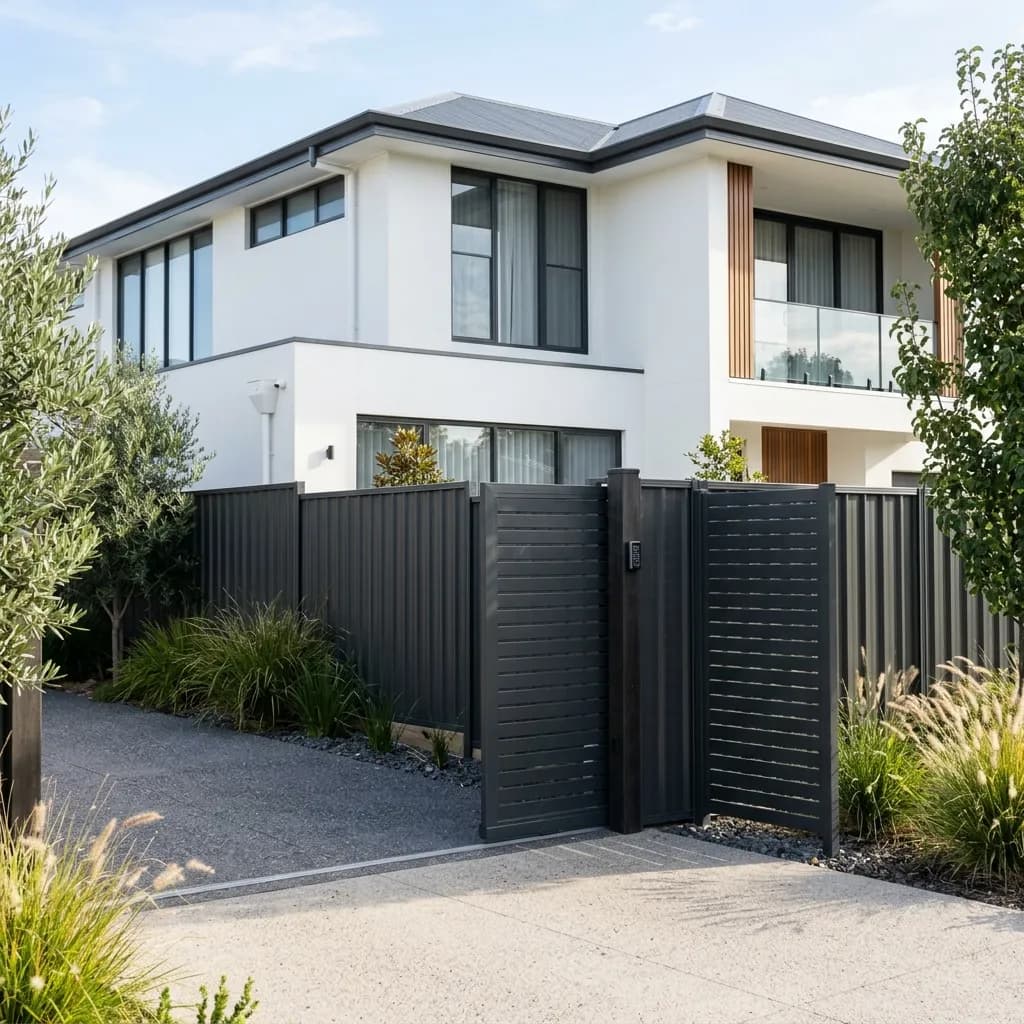
| Colorbond | 20 – 25 yrs | Occasional wash | The base edge, if set in soil |
| Aluminium slat | 30+ yrs | None | Powder coat chalking, cosmetically |
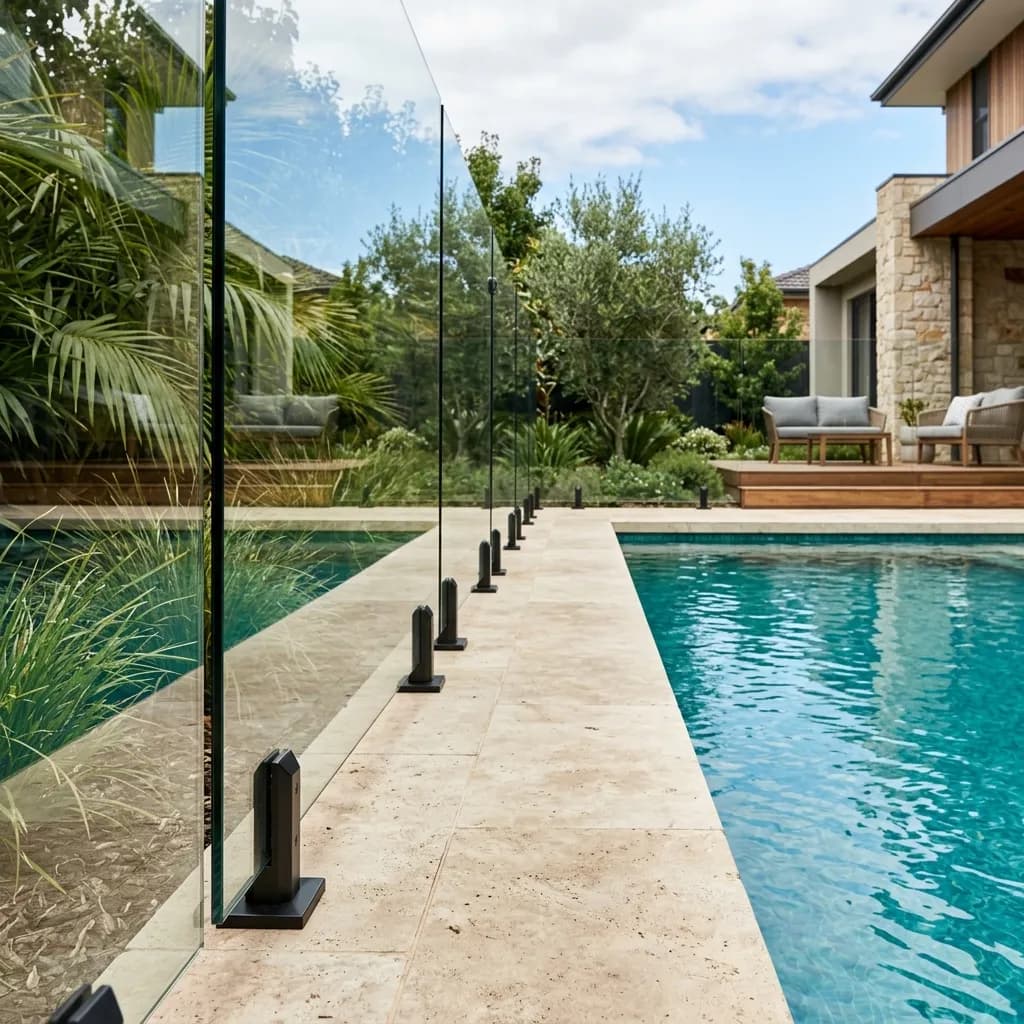
| Glass pool fencing | 25+ yrs | Regular cleaning | Spigots and gate hardware |
Ranges are for metropolitan Melbourne. Within a few streets of the bay, reduce the Colorbond figure and treat aluminium or hardwood as the more sensible options.
Lifespan is only half the story
A fence that gets replaced inside twenty years costs you twice. Over a twenty-year horizon, how often you replace and re-coat matters as much as the day-one choice.
| Material | Replaced within 20 yrs? | Coating cycles |
|---|---|---|
| Treated pine paling | Usually, around year 18 | 4 – 5 |
| Hardwood paling | No | 2 – 3, optional |
| Colorbond | No | None |
| Aluminium slat | No | None |
Which is why treated pine, the cheapest to install, is rarely the cheapest to own past about the fifteen-year mark.
Five things that take years off a fence
In roughly the order they matter. Note that only one of them is about the material you chose.
Post depth and treatment
A 1.8 metre fence wants posts at least 600mm into concrete, in H4 timber or equivalent. Shallow or under-treated posts are the single most common reason a fence fails early, and they are invisible once built.
Water at the base
A post sitting in a spot that holds water after rain fails years early. So do palings sitting in soil or mulch. Drainage and a ground gap are worth more than a material upgrade.
Salt exposure
Within a few streets of the bay, salt attacks Colorbond cut edges and any stainless below 316 grade. It shortens metal fences noticeably and leaves timber and aluminium largely alone.
Wind loading
On exposed western and bayside blocks, standard post spacing lets panels flex and work the fixings loose. Closer spacing and heavier posts at install cost far less than the early failure they prevent.
Maintenance that never happens
Treated pine lasting twenty years assumes oiling every few years. Most people do it once. An unmaintained pine fence is closer to twelve years, which removes most of its cost advantage.
Four things about fence lifespan worth knowing
From replacing fences across Melbourne for twenty years. Some of this contradicts what the material brochures say.
Below the ground, on the first day
Everything about how long your fence lasts is settled in the few hours when the posts go in. Nothing you do afterwards recovers a shallow footing.
The material rarely fails first
Most fences we replace have sound palings or panels and failed posts. If you want a fence to last, the money is better spent below ground than on the material above it.
One letter, a decade
H3 timber is rated for above-ground use and rots at the soil line. H4 is for ground contact. The price difference is a few dollars a post and the lifespan difference is roughly a decade.
Colorbond in soil rusts
A Colorbond sheet set into dirt or mulch wicks moisture and rusts from the bottom edge, and it voids the warranty. A plinth or a deliberate ground gap prevents it entirely.
Brochure numbers are optimistic
Published lifespans assume ideal installation, ideal drainage and diligent maintenance. The ranges on this page are what we see on real Melbourne boundaries.
We build across Melbourne
Bayside
Known for Bayside, Glen Eira and Port Phillip councils.
Fence lifespan questions
What people ask when weighing up materials.
Ask us to assess your fenceTreated pine paling 15 to 20 years, hardwood 25 to 30. Both assume H4 posts set properly in concrete and palings that are not sitting in soil. An unmaintained pine fence is closer to twelve.
Related guides
When to Replace a Fence
The post test, and where repair stops being value.
Read more GuideRotting Fence Palings
What to do when the base of the timber goes first.
Read more ComparisonColorbond vs Timber
The same comparison, costed over twenty years.
Read more ComparisonCompare Fence Types
Every material side by side on cost and lifespan.
Read more GuideHow to Clean a Colorbond Fence
The only maintenance a Colorbond fence actually needs.
Read more
Want to know what your fence has left?
We will check the posts and tell you honestly whether you are looking at years or months, and what a replacement would cost.